Reviewed by the TRU Biologix Medical Team
Dry skin is short on oil; dehydrated skin is short on water. Dry skin is a skin type: it makes less sebum and tends to feel rough and flaky all year. Dehydration is a temporary state that can affect any skin type, including oily skin, and shows up as tightness, dullness and fine lines that look more obvious. Dry skin needs lipids; dehydrated skin needs water first, then something to hold it in.
Key takeaways
- Dry skin lacks oil (lipids); dehydrated skin lacks water. You can have both at once.
- Oily skin can still be dehydrated: shiny but tight, with makeup that settles into lines.
- Dehydrated skin needs humectants on damp skin, sealed with a moisturiser.
- Dry skin needs richer, lipid-based care: ceramide creams and facial oils.
What is the difference between dehydrated and dry skin?
The outer layer of skin stays supple thanks to two systems. Natural moisturising factors inside the cells hold water, and lipids such as ceramides between the cells keep that water from escaping. Dry skin is mostly a lipid problem: there is too little oil to keep the surface smooth and sealed. Dehydrated skin is a water problem: the surface is losing water faster than it is replaced, often because of cold air, heating, harsh cleansers or over-exfoliation.
That is why the fixes differ. Adding oil to dehydrated skin will not put water back, and adding water alone to dry skin will not keep it there.
Self-check: which one do you have?
Tick what applies most days. Most people lean clearly to one side; some have a mix.
Short on oil
Dry skin
Short on water
Dehydrated skin
The pinch check: gently pinch the skin on your cheek. If it creases into lots of fine lines and is slow to smooth out, it is likely short on water.
Dehydrated vs dry skin at a glance
| Dry skin | Dehydrated skin | |
|---|---|---|
| What is missing | Oil (lipids) | Water |
| Type or state? | Skin type, long-term | Temporary state |
| Can oily skin have it? | No | Yes |
| Typical feel | Rough, flaky, itchy patches | Tight, dull, crepey fine lines |
| Key ingredients | Ceramides, fatty acids, facial oils | Humectants: hyaluronic acid, glycerin, betaine |
| Texture to choose | Rich creams | Light layers, then a moisturiser to seal |
Based on Rawlings 2004. Many people have both; add water first, then lipids.

How to care for dehydrated skin
Add water, then hold it in. Apply humectant layers such as hyaluronic acid, glycerin or betaine to slightly damp skin, then follow with a moisturiser so the water does not simply evaporate. Lightweight layers suit oily-dehydrated skin better than one heavy cream.
Take away what dehydrates: very hot water, strong foaming cleansers and too much exfoliation. A soft, low-foam option such as the Exoblanc Foaming Toner combines hyaluronic acid and glycerin in a gentle foam. For a hydration boost, the Exoblanc COS EXO ampoule pairs panax ginseng protoplasts with sodium hyaluronate. Layering order is covered in ampoule vs serum vs essence.
How to care for dry skin
Dry skin needs lipids. A ceramide-based cream does most of the work; a facial oil pressed over it at night adds a final seal. A study of a moisturiser combining natural moisturising factors with lipids found it supported skin barrier measures in people with sensitive skin, a reminder that water-holding and lipid ingredients work best together.
The Exoblanc Skin Barrier Cream covers the cream step, and the Exoblanc CERA oil carries ceramide NP at 10,000 ppm for the oil step. Dry skin gets worse in cold weather, so see our winter skincare routine for dry, tight skin too.
What if you have both?
Very common, especially in winter. Layer in order: humectant serum on damp skin, ceramide cream, then facial oil on the driest areas at night. Cut exfoliation to once or twice a week until skin feels comfortable again.
Products in this article

Exoblanc Foaming Toner
Gentle cloud-like foam with hyaluronic acid and glycerin for hydration without stickiness.
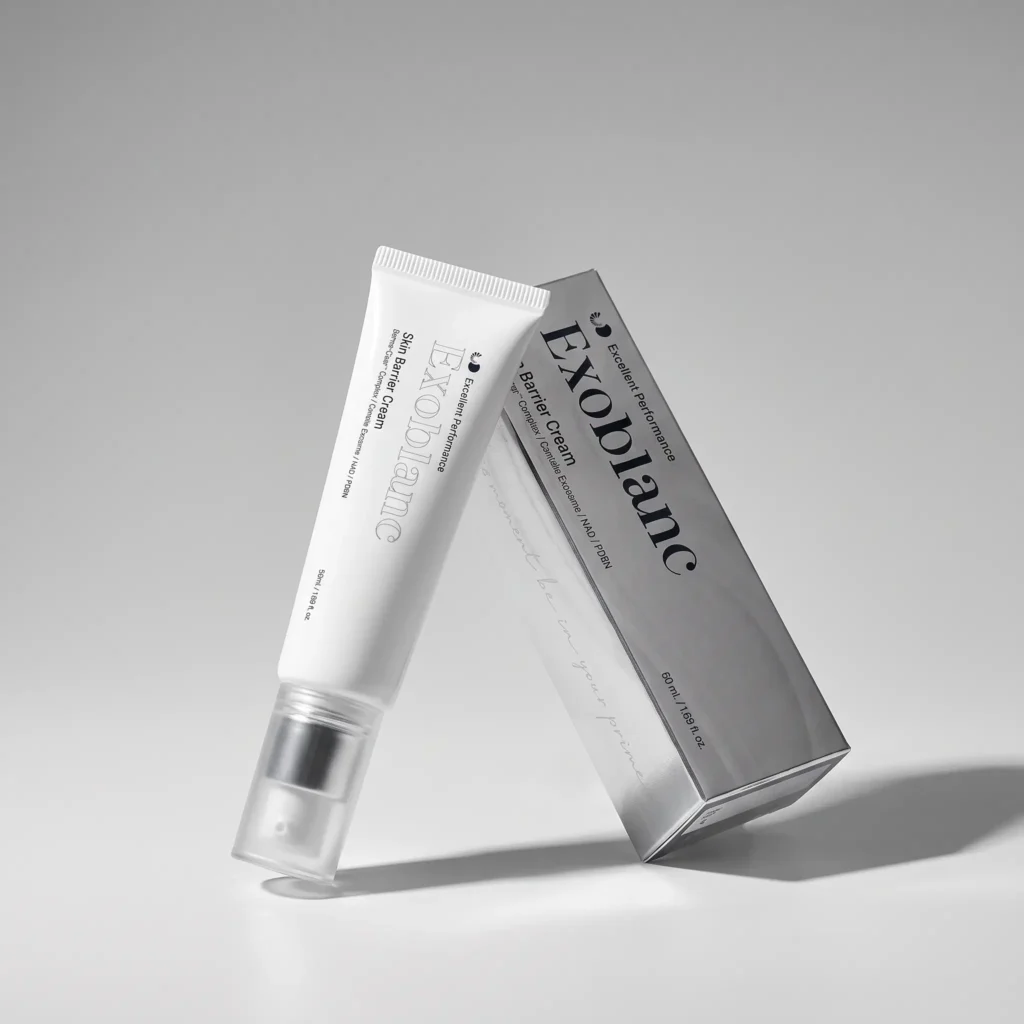
Exoblanc Skin Barrier Cream
Soft, hydrating cream that supports the skin’s moisture barrier for dry, tight-feeling skin.
Frequently asked questions
How do I know if my skin is dry or dehydrated?
Dry skin feels rough or flaky most of the year and rarely gets shiny. Dehydrated skin feels tight, looks dull and can still get oily. A gentle pinch that leaves lots of fine lines points to dehydration.
Can oily skin be dehydrated?
Yes. Dehydration is a lack of water, not oil, so oily skin can feel tight and look dull while still producing shine.
Is dehydrated skin the same as dry skin?
No. Dry skin is a skin type that lacks oil. Dehydrated skin is a temporary state that lacks water and can affect any skin type.
What is best for dehydrated skin?
Humectants such as hyaluronic acid, glycerin and betaine on damp skin, followed by a moisturiser to seal the water in, plus gentler cleansing.
What is best for dry skin?
Lipid-rich care: a ceramide-based cream and, if needed, a facial oil at night. Avoid hot water and harsh cleansers.
Can you have dry and dehydrated skin at the same time?
Yes, especially in winter. Layer a humectant serum, then a ceramide cream, then facial oil where skin is driest.
References
- Rawlings AV, Harding CR. Moisturization and skin barrier function. Dermatol Ther 2004;17(Suppl 1):43–48. doi:10.1111/j.1396-0296.2004.04s1005.x
- Bernhardt KT, Zaleski E, Li WH, et al. Skin barrier benefits of a natural moisturizing factor and lipids-based moisturizer for clinically sensitive skin. J Drugs Dermatol 2025;24(10):1029–1035. doi:10.36849/jdd.9386
- Meckfessel MH, Brandt S. The structure, function, and importance of ceramides in skin and their use as therapeutic agents in skin-care products. J Am Acad Dermatol 2014;71(1):177–184. doi:10.1016/j.jaad.2014.01.891
- Manufacturer data, Exoblanc Foaming Toner, COS EXO, Skin Barrier Cream and Exoblanc Oil CERA: ingredients.