Reviewed by the TRU Biologix Medical Team
Under-eye patches and eye cream are not competing for the same job. Patches are a short, concentrated boost: 15 to 20 minutes of hydration and cooling that makes the eye area look smoother and less puffy for the day. Eye cream is the daily habit that works on the look of tone, dryness and fine lines over weeks. Most people get the best result from eye cream every day and patches when they want a quick refresh.
Key takeaways
- Patches hold a concentrated serum against the skin for 15 to 20 minutes; the effect is visible but temporary.
- Eye cream is applied twice a day and works on the look of tone, dryness and fine lines over eight to twelve weeks.
- Cool patches and caffeine can make puffiness look less pronounced for a few hours.
- Use patches after cleansing and before eye cream, then follow with moisturiser and sunscreen.
What do under-eye patches actually do?
Most under-eye patches are hydrogel or bio-cellulose shapes soaked in a serum, usually built around humectants such as glycerin and hyaluronic acid. While they sit on the skin, they keep that serum in close contact and slow evaporation, so the thin skin under the eyes takes on water and looks plumper and smoother.
That is also their limit. Hydration shows quickly and fades over the day, so patches are best thought of as a pre-event or morning-after step rather than a long-term fix. Patches stored in the fridge add a cooling effect that many people find helps the eye area look less puffy.

Under-eye patches vs eye cream at a glance
Under-eye patches
- Quick, visible boost in 15 to 20 minutes
- Hydration and cooling for a smoother, less puffy look
- Effect lasts hours, not weeks
- Best before events, after short nights or travel
- Used a few times a week
Eye cream
- Daily, morning and evening
- Works on the look of tone, dryness and fine lines
- Changes build over eight to twelve weeks
- Can include brightening and firming ingredients
- The foundation of an eye-area routine
Which should you choose?
Match the product to what you see in the mirror.
| What you notice | Reach for | Why |
|---|---|---|
| Puffiness in the morning | Cool patches, then a caffeine eye cream | Cooling and caffeine make puffiness look less pronounced for a few hours |
| Crepey, dry-looking skin | Eye cream daily, patches before events | Steady hydration plus a quick boost |
| Dull or uneven-looking tone | Eye cream with niacinamide or vitamin C | Tone changes slowly and needs daily use |
| Fine lines | Eye cream with peptides | The look of fine lines responds to consistent use |
| Shadows from hollowness | Neither will change the contour | A licensed provider can advise on in-office options |
Sources: Sarkar et al. 2016; Herman and Herman 2013.

Why ingredients matter more than format
A patch soaked in plain glycerin and a cream with niacinamide, peptides and caffeine do very different things. Read the ingredient list either way. Hyaluronic acid and glycerin bring hydration; caffeine helps puffiness look less pronounced for a short time; niacinamide and vitamin C target the look of dull tone; peptides target the look of firmness.
Exoblanc’s NMN Eye Cream pairs NMN and niacinamide for a brighter, fresher look with peptides and exosomes for a firmer-looking eye contour. It is a topical cosmetic for beautification purposes only. Our guide to eye cream for dark circles goes deeper on matching ingredients to concerns.
How to use under-eye patches and eye cream together
Cleanse
Wash gently and pat the eye area dry.
Patch (optional)
Place patches along the orbital bone, not too close to the lash line, for 15 to 20 minutes.
Press in the leftover serum
Remove the patches and pat any remaining serum into the skin.
Eye cream
A rice-grain amount, dotted along the orbital bone and patted in with the ring finger.
Moisturiser and sunscreen
Finish the rest of the face as usual; take sunscreen close to the eyes in the morning.
If the skin under your eyes feels tight rather than oily-dry, it may be dehydration; dehydrated vs dry skin explains how to tell.
Do under-eye patches really work?
Yes, for what they are designed to do: a visible, short-term improvement in hydration and smoothness, and a cooler, less puffy look. They will not change shadows caused by the shape of the eye area, and the effect fades within the day. For lasting changes in the look of tone and fine lines, consistency with a good eye cream and daily sunscreen matters more than any single patch. Dark circles that appear suddenly or affect one eye only are worth showing to a licensed provider.
Products in this article

Exoblanc NMN Eye Cream
NMN, niacinamide, peptides and plant exosomes for a brighter, firmer-looking eye area.
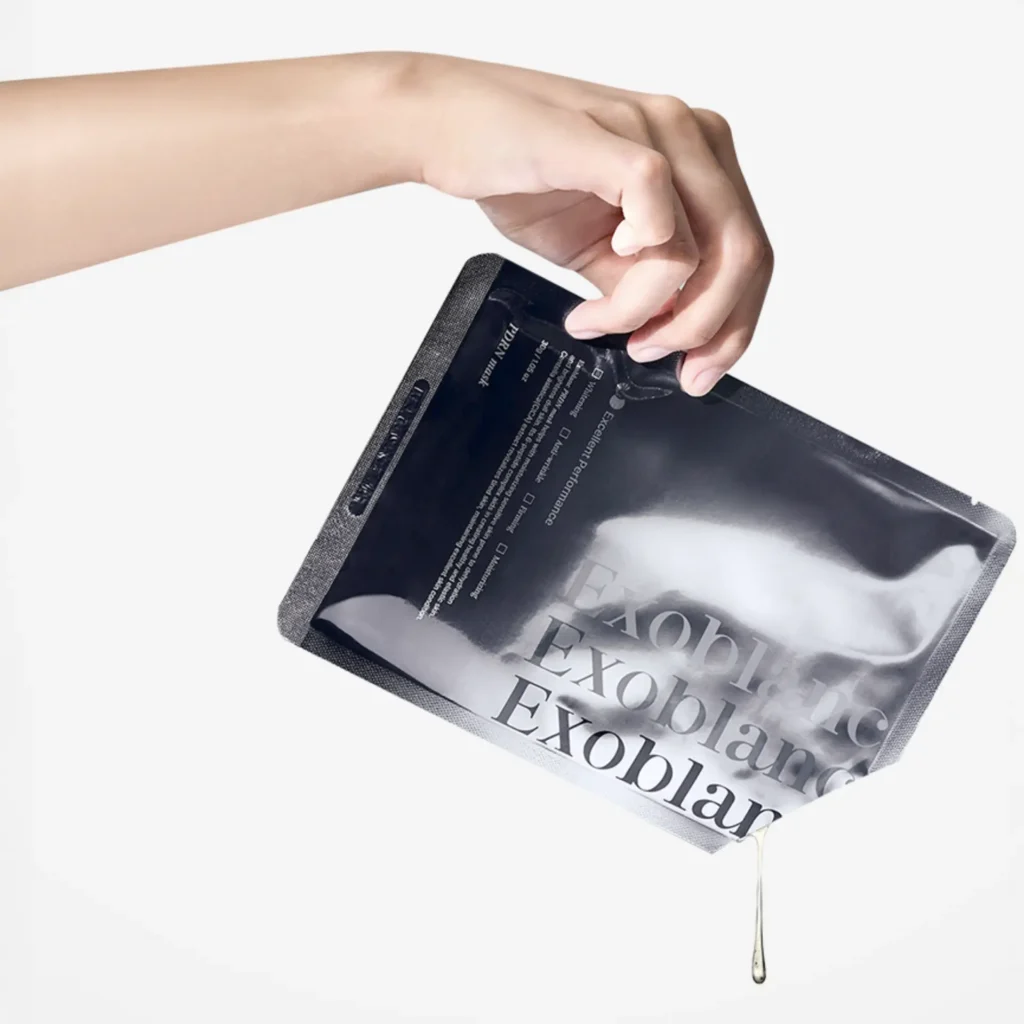
Exoblanc PDRN Mask
Bio-cellulose sheet mask holding 30 mL of essence with PDRN, exosomes and peptides.
Frequently asked questions
Are under-eye patches better than eye cream?
Not better, different. Patches give a quick, temporary boost in hydration and smoothness; eye cream works on the look of tone, dryness and fine lines with daily use over weeks.
Do I use under-eye patches before or after eye cream?
Before. Use patches on clean skin, pat in the leftover serum, then apply eye cream, moisturiser and sunscreen.
How often should I use under-eye patches?
Two or three times a week, or before events, works for most people. Eye cream is the daily step.
Do under-eye patches help with puffiness?
They can make puffiness look less pronounced for a few hours, especially when stored in the fridge or made with caffeine. The effect is temporary.
Can I reuse under-eye patches?
No. Patches are designed for single use; reusing them is less hygienic and they hold little serum after the first application.
References
- Sarkar R, Ranjan R, Garg S, Garg VK, Sonthalia S, Bansal S. Periorbital Hyperpigmentation: A Comprehensive Review. J Clin Aesthet Dermatol 2016;9(1):49–55.
- Herman A, Herman AP. Caffeine’s mechanisms of action and its cosmetic use. Skin Pharmacol Physiol 2013;26(1):8–14.
- Verdier-Sévrain S, Bonté F. Skin hydration: a review on its molecular mechanisms. J Cosmet Dermatol 2007;6(2):75–82.