Reviewed by the TRU Biologix Medical Team
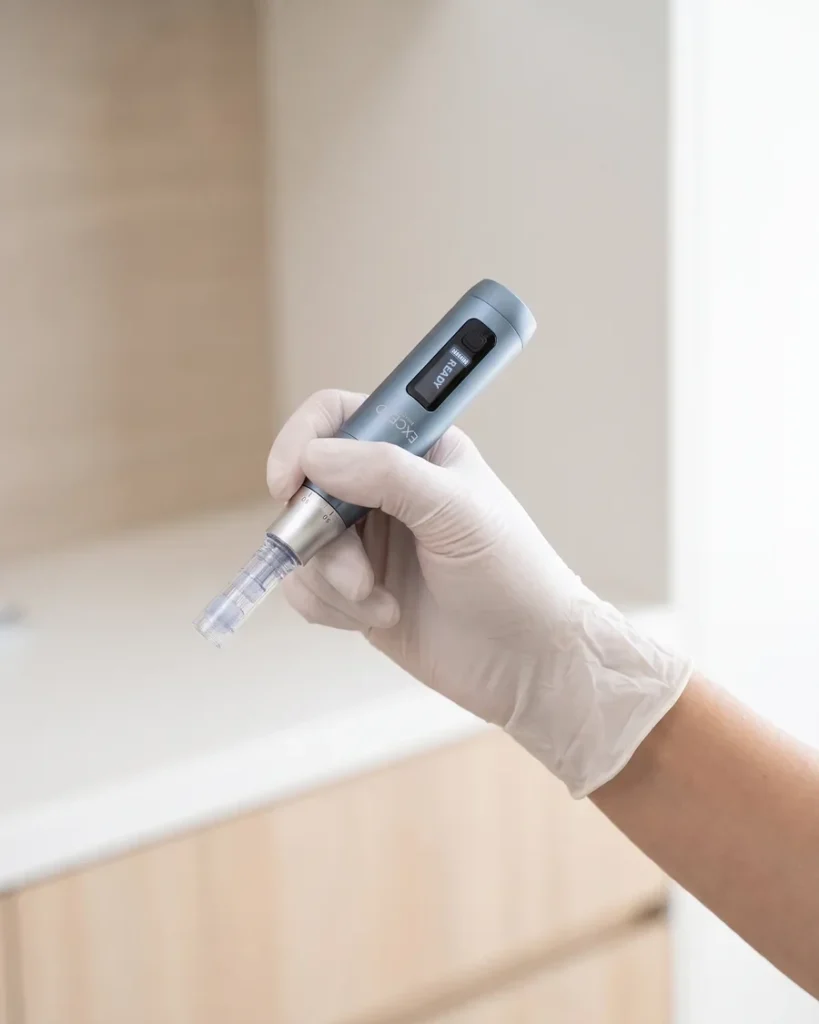
A microneedling pen is a motorised handpiece that moves a small cartridge of needles straight in and out of the skin, while a derma roller is a hand-rolled drum covered in fixed needles. In professional practice the pen has become the standard, because it enters the skin perpendicularly, lets the provider set the depth, and uses single-use cartridges. Treatments that go through the skin belong with licensed providers.
Key takeaways
- Pens move needles vertically at a set depth; rollers press fixed needles in at an angle as the drum turns.
- Single-use cartridges and adjustable depth are the main reasons clinics favour pens.
- Pens are designed for clinic use by licensed providers; rollers are mostly sold for home use.
- Look for cartridge protection against backflow, depth precision, perpendicular entry and published studies.
How does a microneedling pen work?
A pen drives a cartridge of fine needles up and down many times per second while the provider glides it across the skin. The depth is set on the device, the speed is controlled by the motor, and the cartridge is discarded after each patient.
Reviews of microneedling describe three main device families: rollers, stamps and motorised pens. They all create tiny, controlled channels at the skin’s surface, but they differ in how consistently they do it.
Depth control is a big part of that difference. Facial skin is not the same thickness everywhere, so providers adjust the setting as they move from one area to the next. A roller cannot do this: its depth is fixed by the length of its needles.
Microneedling pen vs derma roller vs stamp
The biggest differences are needle angle, depth control and hygiene.
| Microneedling pen | Derma roller | Derma stamp | |
|---|---|---|---|
| How it moves | Motor drives needles straight in and out | Drum rolls across the skin | Pressed straight down by hand |
| Needle entry | Perpendicular | At an angle as the drum turns | Perpendicular |
| Depth control | Adjustable on the device | Fixed by needle length | Fixed by needle length |
| Hygiene | Single-use cartridges | Whole head reused unless disposable | Varies by product |
| Coverage | Even, fast on the full face | Fast but less uniform | Slow; suits small areas |
| Typical user | Licensed providers in clinic | Mostly consumer and home use | Small-area touch-ups |
Sources: Alster and Graham 2018; Ramaut et al. 2018.
What should you look for in a professional microneedling pen?
Judge build quality, hygiene and evidence, not just price.
- ✓Documentation. Clear regulatory and safety documentation for the exact model you are buying.
- ✓Cartridge protection. Single-use cartridges with a barrier that stops fluid travelling back into the handpiece between patients.
- ✓Depth precision. Published tolerances for how closely the real depth matches the setting.
- ✓Perpendicular entry. A needle plate that stays flat to curved areas of the face.
- ✓Smooth, fast cycling. Higher frequency gives denser coverage with less drag.
- ✓Published studies. Peer-reviewed work on the specific platform, not just on microneedling in general.
- ✓Training and support. Protocols, service and replacement cartridges from a supplier you can reach.
Where Exceed Unlimited fits
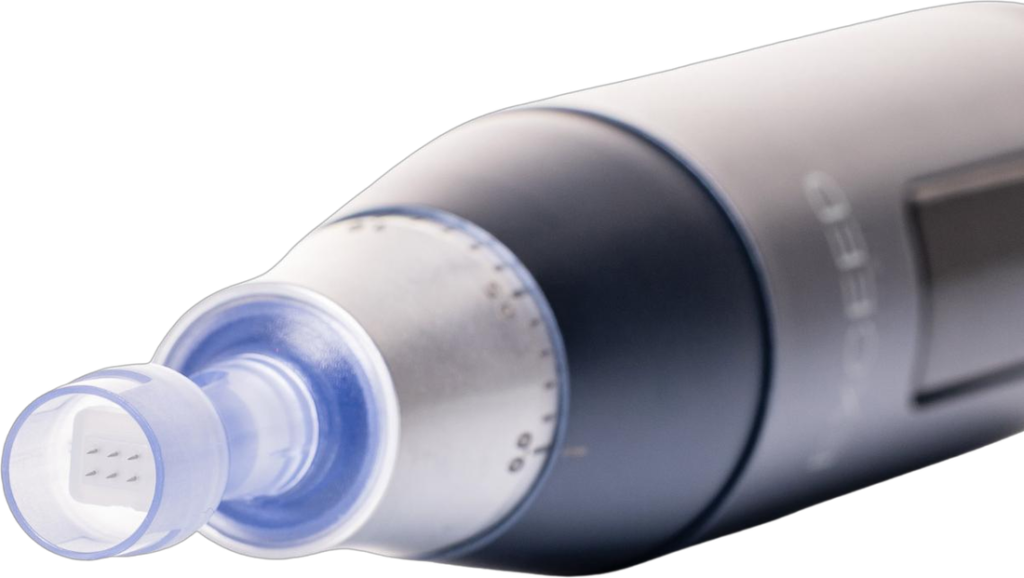
The FDA-cleared Exceed Unlimited microneedling device is a German-engineered pen used only by licensed providers, following its own clinical protocols. According to manufacturer data, it uses a tilting six-needle plate that follows facial contours for perpendicular entry, cycles at up to 150 Hz, and has single-use cartridges with a patented membrane that blocks fluid backflow into the handpiece. The platform has been studied in peer-reviewed work published in the Journal of Clinical and Aesthetic Dermatology.
What about derma rollers at home?
Home rollers are a different category from clinic pens. Anything that goes through the skin is best left to licensed providers using cleared devices, with proper skin preparation and hygiene. At home, the more useful work is a short routine that keeps skin comfortable between visits: a gentle cleanser, hydration, a barrier-supporting moisturiser and daily sunscreen. If you are comparing needle-free options, our guide to spicules vs microneedling explains how they differ.
Skincare around professional microneedling
The provider’s aftercare comes first, for as long as it says. Once normal home care is cleared, keep the routine simple and comfortable: hydrating layers, a moisturiser that supports the skin’s barrier, and broad-spectrum sunscreen every morning. A gentle facial mist can add comfort during the day; see what hypochlorous acid does in skincare. For the full between-visits routine, read skincare between professional treatments.
Products in this article
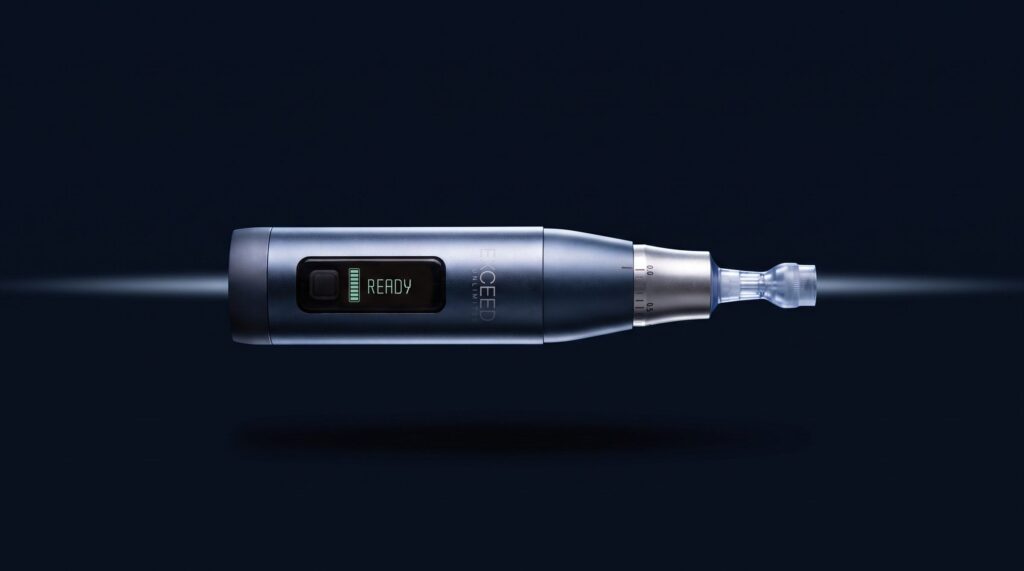
Exceed Unlimited
FDA-cleared microneedling device with a tilting six-needle plate, for licensed providers.
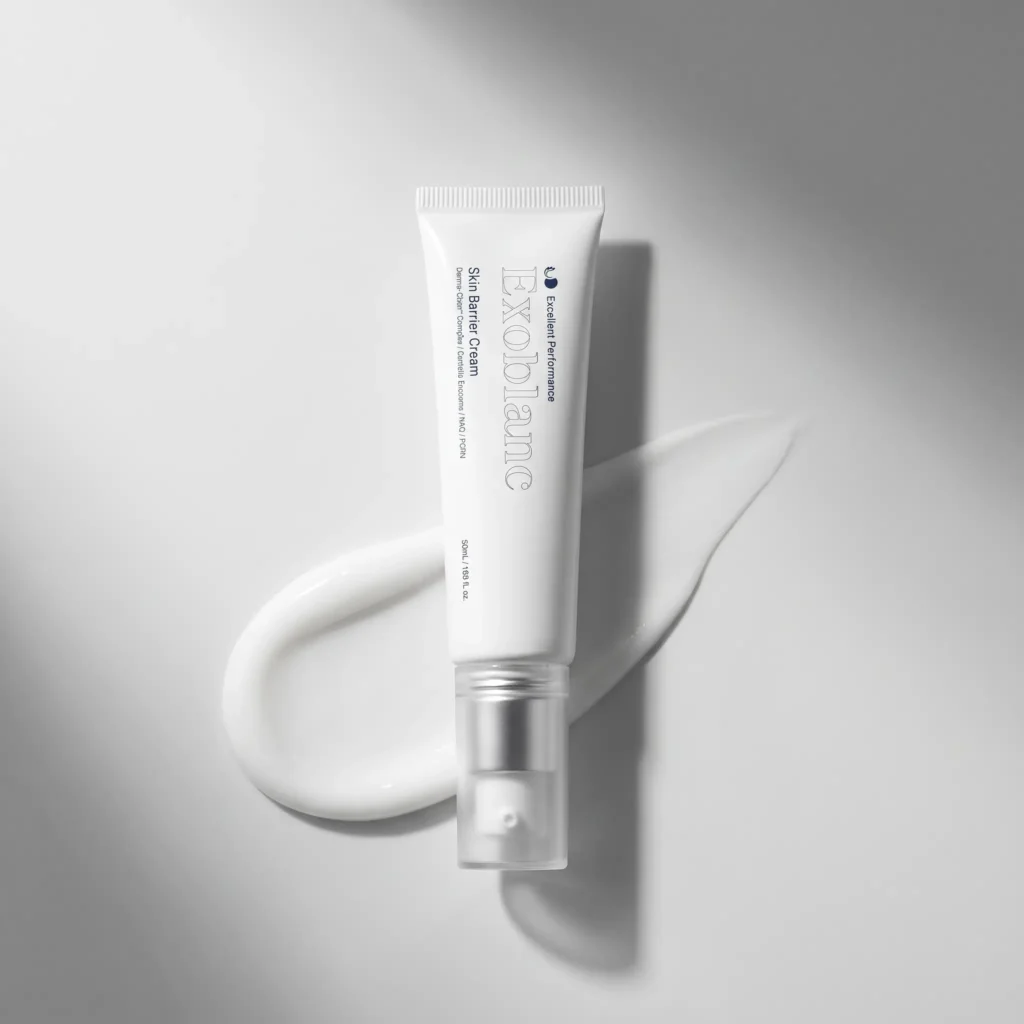
Exoblanc Skin Barrier Cream
Light cream for comfort and hydration between professional treatments.
Frequently asked questions
Is a microneedling pen better than a derma roller?
For professional use, pens are generally preferred: the needles enter straight, the depth is adjustable and cartridges are single-use. Rollers press fixed needles in at an angle and are mostly sold for home use.
What microneedling pen do professionals use?
Licensed providers typically use motorised pens with single-use cartridges and adjustable depth, such as the FDA-cleared Exceed Unlimited microneedling device.
What is the difference between a derma stamp and a derma roller?
A stamp is pressed straight down, so the needles enter perpendicularly, while a roller turns across the skin and the needles enter at an angle. Stamps are slower and suit small areas.
Can I use a microneedling pen at home?
Treatments that go through the skin are best left to licensed providers using professional devices, with proper preparation and hygiene. At home, focus on gentle cleansing, hydration, a barrier-supporting moisturiser and daily sunscreen.
How often is professional microneedling done?
It depends on the device, the protocol and the provider’s assessment. Your provider will set the schedule.
References
- Alster TS, Graham PM. Microneedling: A Review and Practical Guide. Dermatol Surg 2018;44(3):397–404.
- Ramaut L, Hoeksema H, Pirayesh A, Stillaert F, Monstrey S. Microneedling: Where do we stand now? A systematic review of the literature. J Plast Reconstr Aesthet Surg 2018;71(1):1–14.
- Ablon G. Safety and Effectiveness of an Automated Microneedling Device in Improving the Signs of Aging Skin. J Clin Aesthet Dermatol 2018;11(8):29–34.
- Manufacturer data, Exceed Unlimited: needle plate design, frequency and cartridge safety membrane.