Reviewed by the TRU Biologix Medical Team
In skincare, hypochlorous acid (HOCl) is a mild, water-based ingredient used in facial mists to cleanse and refresh the skin’s surface, leaving it feeling calm. It is the same molecule the body makes naturally, and it is far gentler than bleach, even though both are made from chlorine. Whether a product works as intended depends mostly on its pH, how it is made and how it is stored.
Key takeaways
- Hypochlorous acid is a weak acid the body produces naturally; skincare uses it in dilute, water-based mists.
- It is not bleach: at skin-friendly pH most of the chlorine is present as gentle HOCl, not harsher hypochlorite.
- HOCl is unstable, so pH, manufacturing method and opaque, airtight packaging matter more than marketing.
- Use it as a refreshing mist on clean skin, before serums, and keep it out of direct light.
What is hypochlorous acid?
Hypochlorous acid is a weak acid made of hydrogen, oxygen and chlorine. The body makes it naturally: white blood cells produce it as part of their normal defence chemistry. For commercial use it is made either by passing an electric current through salt water (electrolysis) or by acidifying a hypochlorite solution, which produces a mix of HOCl and hypochlorite ions in balance with each other.
In cosmetic facial mists, HOCl is used at low concentrations in water, usually alongside hydrating and soothing ingredients. Some HOCl products are sold for other purposes with their own rules and claims; this article covers HOCl in cosmetic facial mists only.
Hypochlorous acid vs bleach: what is the difference?
The difference is pH. Chlorine in water exists in two forms: hypochlorous acid (HOCl) and hypochlorite ion (OCl⁻), the main form in household bleach. Research on chlorine chemistry shows which form dominates depends on pH: in slightly acidic to neutral conditions most of it is HOCl; in alkaline conditions, like bleach, it shifts to hypochlorite. Skincare mists are formulated in that skin-friendly range and at much lower concentrations.
| Hypochlorous acid mist | Household bleach | |
|---|---|---|
| Main chlorine form | Hypochlorous acid (HOCl) | Sodium hypochlorite (OCl⁻) |
| pH | Slightly acidic to near neutral | Strongly alkaline |
| Concentration | Low, diluted in water | High |
| Use | Cosmetic facial mists | Household cleaning only; never on skin |
Based on Fukuzaki 2006 and Edwards-Jones 2026.
What does hypochlorous acid do for the skin?
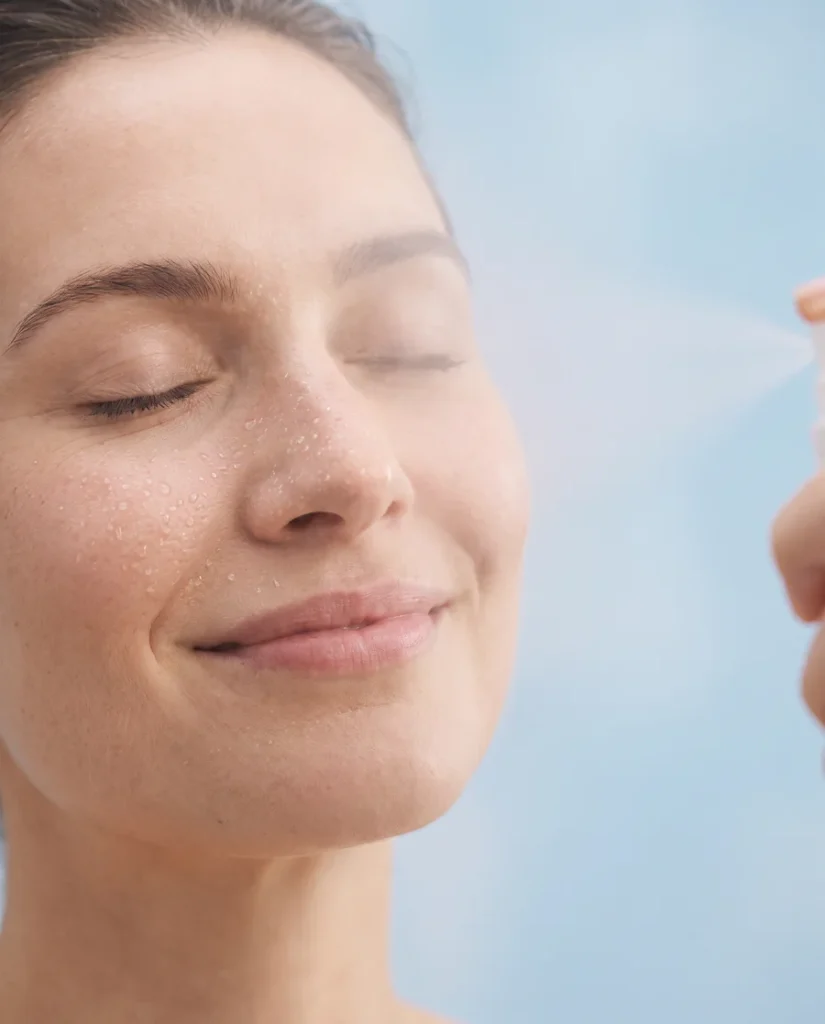
In a facial mist, HOCl helps cleanse and refresh the skin’s surface, and the mist leaves skin feeling calm and comfortable. That makes it popular for skin that feels sensitive or stressed, after workouts, during travel, and between steps of a routine.
It is not a moisturiser on its own. HOCl mists are mostly water, so pair them with hydrating ingredients and follow with a serum and cream. Many formulas, including the Exoblanc Soothing Mist, build those in: it combines HOCl with PDRN, plant exosomes and betaine for hydration and comfort. More on that ingredient family is in what are plant exosomes?
How to read a hypochlorous acid label
HOCl breaks down over time, especially with light, heat and air. A review on HOCl in skin care stresses that the HOCl-to-hypochlorite ratio changes over time and that controlled pH and storage are essential for shelf life. These are the details worth checking.
| On the label | What it means | What to look for |
|---|---|---|
| Hypochlorous acid / HOCl | The active ingredient | Listed by name, not just as electrolyzed water |
| Sodium hypochlorite | Chlorine in its alkaline, bleach-type form | Should not be the main ingredient in a facial mist |
| pH | Decides how much is HOCl vs hypochlorite | Slightly acidic to near neutral |
| ppm | Concentration of available chlorine | Cosmetic mists use low levels; more is not better |
| Packaging | Light and air degrade HOCl | Opaque or tinted bottle, fine-mist pump |
| Other ingredients | Hydration and comfort | Humectants and soothing extracts to offset a water-only formula |
pH and stability depend on formulation (Del Rosso 2018).
Common questions about hypochlorous acid sprays
Is hypochlorous acid safe for daily use on the face?
Cosmetic HOCl mists are designed for daily use on intact skin and are generally well tolerated. As with any new product, patch test first and stop if skin feels irritated.
When in the routine should you use it?
After cleansing and before serums. Mist, let it settle for a few seconds, then continue. It can also be used during the day over makeup or after exercise to refresh the skin. See where mists fit in a full Korean skincare routine.
Can it be used after professional treatments?
Many providers include a gentle mist for comfort and hydration between visits, but the provider’s own aftercare comes first. Our guide to post-procedure skincare covers what to use and what to pause.
Does it smell like chlorine?
A faint swimming-pool note is normal for HOCl and fades within seconds. A strong chlorine smell can mean the product has degraded or contains more hypochlorite.
Products in this article

Exoblanc Soothing Mist
Fine facial mist with hypochlorous acid, PDRN and plant exosomes that refreshes and comforts sensitive-feeling skin.
Exoblanc Relief Bubble Cleanser
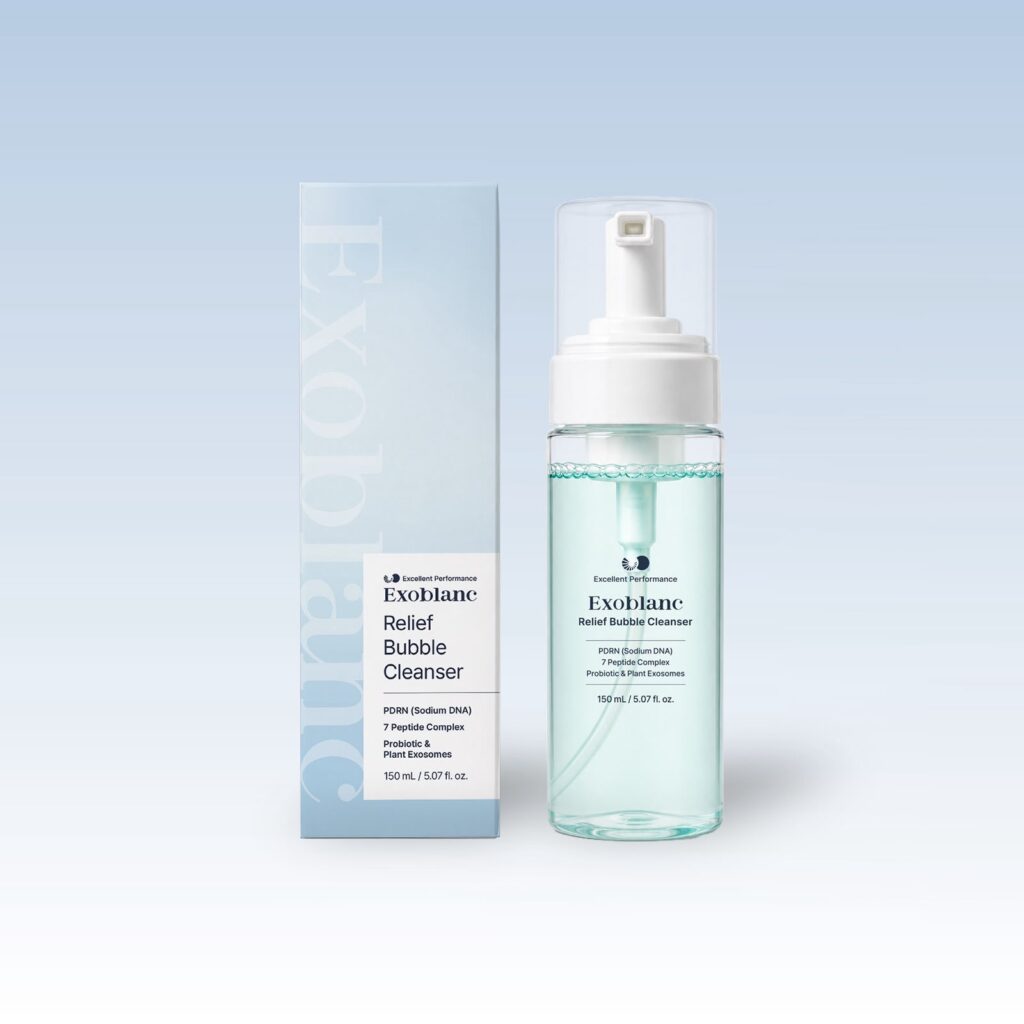
Gentle, dense foam that cleanses without leaving skin tight, the step before a refreshing mist.
Frequently asked questions
What does hypochlorous acid do for your face?
In cosmetic facial mists, hypochlorous acid helps cleanse and refresh the skin’s surface and leaves skin feeling calm and comfortable. It works best alongside hydrating ingredients.
Is hypochlorous acid the same as bleach?
No. Both contain chlorine, but bleach is mainly sodium hypochlorite at alkaline pH and high strength. HOCl mists are low concentration at a skin-friendly, slightly acidic to neutral pH.
Can you use hypochlorous acid spray every day?
Cosmetic HOCl facial mists are made for daily use on intact skin. Patch test first and stop if skin feels irritated.
When should I use hypochlorous acid in my routine?
After cleansing and before serums and moisturiser. It can also be misted during the day to refresh skin.
Does hypochlorous acid expire?
Yes. HOCl gradually breaks down, faster with light, heat and air. Keep it closed, out of sunlight and use it within the period on the label.
Why does my hypochlorous acid spray smell like chlorine?
A faint pool-like scent is normal and fades quickly. A strong chlorine smell may mean the product has degraded.
References
- Edwards-Jones V. Hypochlorous acid: considerations for use in skin care and skin preparation. Adv Skin Wound Care 2026. doi:10.1097/asw.0000000000000524
- Fukuzaki S. Mechanisms of actions of sodium hypochlorite in cleaning and disinfection processes. Biocontrol Sci 2006;11(4):147–157. doi:10.4265/bio.11.147
- Del Rosso JQ, Bhatia N. Status report on topical hypochlorous acid: clinical relevance of specific formulations, potential modes of action, and study outcomes. J Clin Aesthet Dermatol 2018;11(11):36–39.
- Manufacturer data, Exoblanc Soothing Mist: ingredients (hypochlorous acid, PDRN, plant exosomes, betaine).