Reviewed by the TRU Biologix Medical Team
Plant exosomes are nano-sized vesicles that plant cells release naturally: a lipid bubble, usually 30 to 200 nanometres across, carrying lipids, proteins and small RNA fragments from the plant that made it. In skincare they are used as a conditioning ingredient, listed as extracellular vesicles or exosome-like vesicles, and they are now one of the fastest-growing ingredient categories in Korean and professional skincare. This guide explains what they are, how rose exosomes are produced, and what the research so far does and does not show.
Key takeaways
- Plant exosomes are lipid vesicles 30 to 200 nm across that plant cells release; they are not stem cells and not cells at all.
- In skincare they are grown from plant cell cultures (callus) such as Damascus rose, then purified and added to serums, creams and eye care.
- Laboratory research on rose callus vesicles reports antioxidant and skin-conditioning activity in cell models; clinical outcomes are not established.
- On a label, look for ‘extracellular vesicles’, ‘exosome-like vesicles’ or ‘callus culture extract’ plus a stated concentration in ppm.
Quick definition
Plant exosome (also plant-derived extracellular vesicle, PDEV): a membrane-bound particle released by a plant cell that carries the cell’s lipids, proteins and RNA. In cosmetics the term is used loosely for any plant-derived vesicle of that size, whether it was released by living cells in culture or produced by breaking cells apart. Both are legally cosmetic ingredients; neither is a cell, a stem cell or a growth factor.
What are plant exosomes, exactly?
Every living cell, plant or animal, sheds small vesicles into its surroundings. Scientists call them extracellular vesicles. The smallest class, roughly 30 to 150 nanometres, is called exosomes, and the name has stuck in cosmetics even where the strict size and origin rules are not met.
A plant exosome is one of these vesicles made by a plant cell. Its outer shell is a lipid bilayer, the same basic structure as the membrane of the cell that made it, and inside it carries a sample of the cell’s contents: lipids, proteins, sugars and short RNA fragments. Because the shell is lipid, the vesicle sits comfortably on skin, which is itself oil-based at the surface.
What a plant exosome is not matters just as much. It is not alive, it contains no DNA that can replicate, and it is not a plant stem cell. ‘Stem cell’ marketing and ‘exosome’ marketing are often confused; the vesicle is the package a cell releases, not the cell.

How are rose exosomes made?
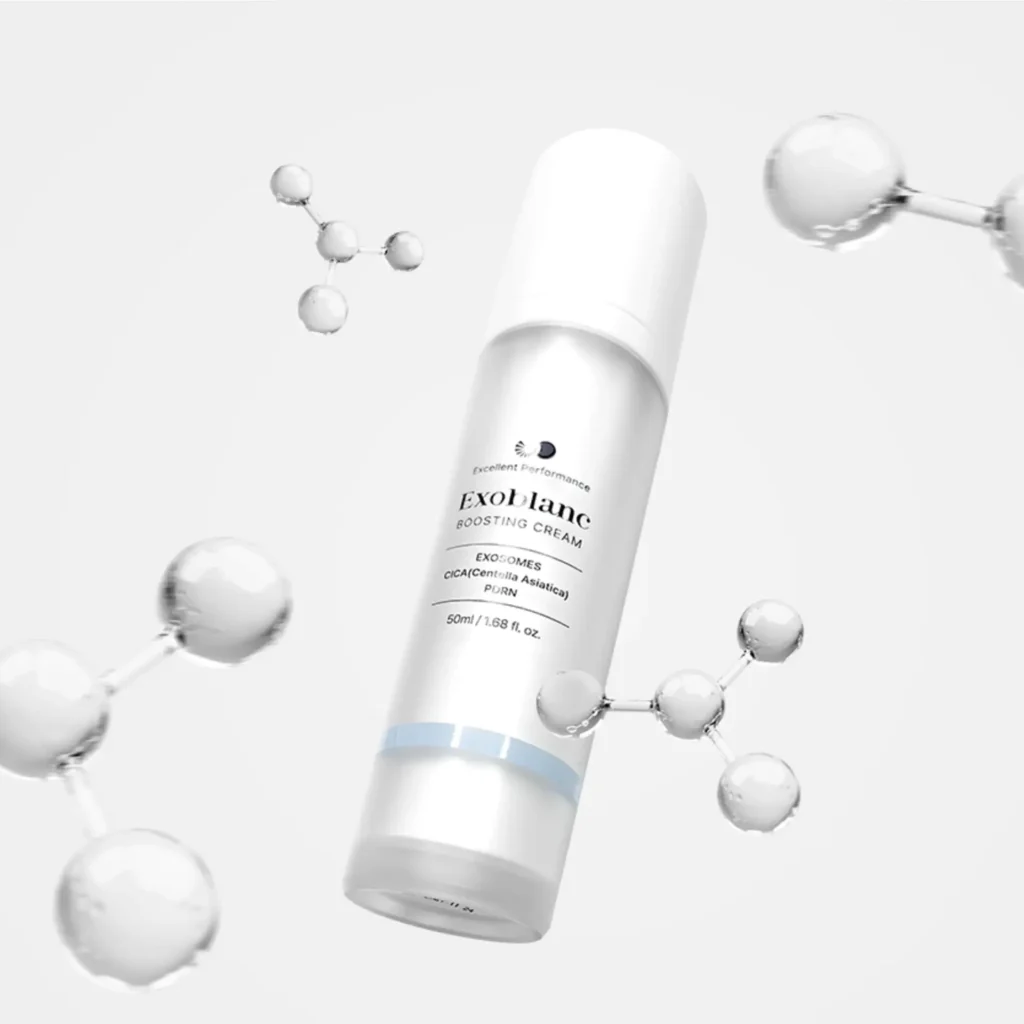
Most plant exosomes in skincare, including the Damascus rose vesicles in the Exoblanc range, come from callus culture. A callus is a mass of undifferentiated plant cells grown in a sterile lab from a small piece of plant tissue, in this case Rosa damascena. The cells are kept in a liquid medium, where they release vesicles into the liquid as they grow.
The medium is then collected and the vesicles are separated from everything else by filtration and centrifugation, then characterised for size and concentration. A 2026 study in the International Journal of Molecular Sciences described exactly this process for Rosa damascena callus-derived exosome-like vesicles and reported their size distribution and protein cargo before testing them in skin cell models.
Callus culture has two practical advantages over pressing petals: the supply is consistent year-round and free of field contaminants, and the vesicle population is more uniform. It also explains why the ingredient appears on labels as ‘Rosa Damascena Callus Culture Extract’ or ‘Rosa Damascena Callus Extracellular Vesicles’ rather than ‘rose extract’.
Plant exosomes vs other exosome sources
The word ‘exosome’ covers vesicles from very different origins, and the differences matter for how an ingredient is made, labelled and regulated.
| Plant-derived (callus culture) | Probiotic / microbial | Animal-derived | |
|---|---|---|---|
| Source | Plant cell cultures (rose, ginseng, centella, grape) | Bacteria such as Lactobacillus | Mammalian cells |
| Cosmetic use | Serums, creams, eye care, cleansers | Serums and creams, often paired with plant vesicles | Limited; regulatory status varies by country |
| Typical label name | Callus culture extract / extracellular vesicles | Lactobacillus ferment extracellular vesicles | Varies |
| Supply | Consistent, lab-grown, vegan | Consistent, lab-grown | Batch-dependent |
| Research status | Mostly in-vitro cell-model studies | Mostly in-vitro | Mixed; largely outside cosmetics |
Exoblanc formulas use plant (Rosa damascena callus) and probiotic (Lactobacillus) vesicles only.
What does the research actually show?
The honest summary: laboratory results are promising, clinical skincare outcomes are still thin. Most published work on plant-derived vesicles is in-vitro, meaning cultured skin cells rather than people, and that is how it should be read.
- Antioxidant activity. A 2024 study in Antioxidants tested a mix of plant-derived extracellular vesicles on cultured human skin cells and reported reduced oxidative stress markers. This is a cell-model result, not a clinical outcome.
- Skin-conditioning activity in cell models. The 2026 Rosa damascena callus study characterised the vesicles and reported multifunctional activity across several skin-related cell assays, again in vitro.
- Delivery and stability. A 2026 review in Frontiers in Bioengineering and Biotechnology summarised the current status of plant-derived vesicles for skin applications and flagged standardisation, dosing and storage stability as the open questions for the field.
- Regulatory context. A 2026 review in the International Journal of Molecular Sciences on extracellular vesicles in cosmetic settings noted that definitions, safety data and labelling practices still vary widely between products.
What this means for a product on the shelf: plant exosomes are a reasonable, well-tolerated conditioning ingredient with an interesting mechanism, not a proven replacement for the basics. Apply the same scepticism to claims of specific results you would apply to any new active.
Myths and facts about exosome skincare
Myth: exosomes are stem cells.
Fact: they are vesicles a cell releases. No living cells, no stem cells, no DNA that can replicate.
Myth: more ppm is always better.
Fact: concentration matters, but so does vesicle integrity. A stated figure such as 500 ppm tells you the formula was characterised; it does not rank it above another product.
Myth: plant exosomes are the same as plant extracts.
Fact: an extract is a solvent pull of whole-plant compounds. A vesicle is a specific, membrane-bound particle isolated from cell culture. The INCI name usually tells you which you are looking at.
Myth: a topical exosome serum works like a professional procedure.
Fact: a cosmetic serum conditions the skin’s surface and upper layers. It is a home-care ingredient, and in-office options are a separate category handled by licensed providers under their own protocols.
How to read plant exosomes on a label
Look for three things.
- An INCI name that says vesicle, not extract. ‘Rosa Damascena Callus Extracellular Vesicles’, ‘Lactobacillus Extracellular Vesicles’ or ‘exosome-like vesicles’ indicate the ingredient is the isolated particle.
- A stated concentration. Reputable formulas give a ppm figure. Exoblanc PDRN Boosting Serum, for example, lists Rosa damascena callus extracellular vesicles at 500 ppm.
- A format that suits the ingredient. Vesicles sit well in water-based serums, lightweight creams and eye creams; they are a conditioning partner to humectants and barrier lipids rather than a replacement for them.
Within the Exoblanc line, plant exosomes appear in Spicule Cream (alongside marine spicules and CICA), NMN Eye Cream (with NMN, peptides and niacinamide) and the Relief Bubble Cleanser. For how any topical ingredient gets past the skin’s outer layer, see our guide to the skin barrier and delivery systems; for the spicule mechanism, see marine spicules explained.
To see how a provider layers exosome-based Exoblanc products into a full routine, watch the Exoblanc routine webinar with Micaela Irvin, FNP-C.
From TRU’s provider education
Delivery, not just the active, decides what a topical can do. Kristen Hanenian, APRN, covered this in the June 2026 TRU webinar ‘Beyond the Booster: Why Delivery Determines Results’.
Replays and upcoming sessions are on the TRU Biologix webinars page.
Products in this article
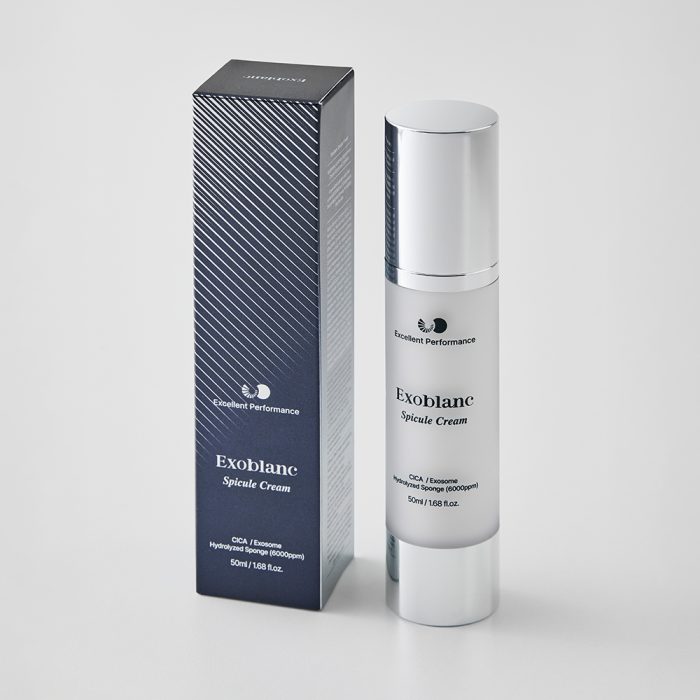
Exoblanc Spicule Cream
Marine spicules with CICA, plant exosomes and Rosa damascena vesicles for smoother-looking texture.
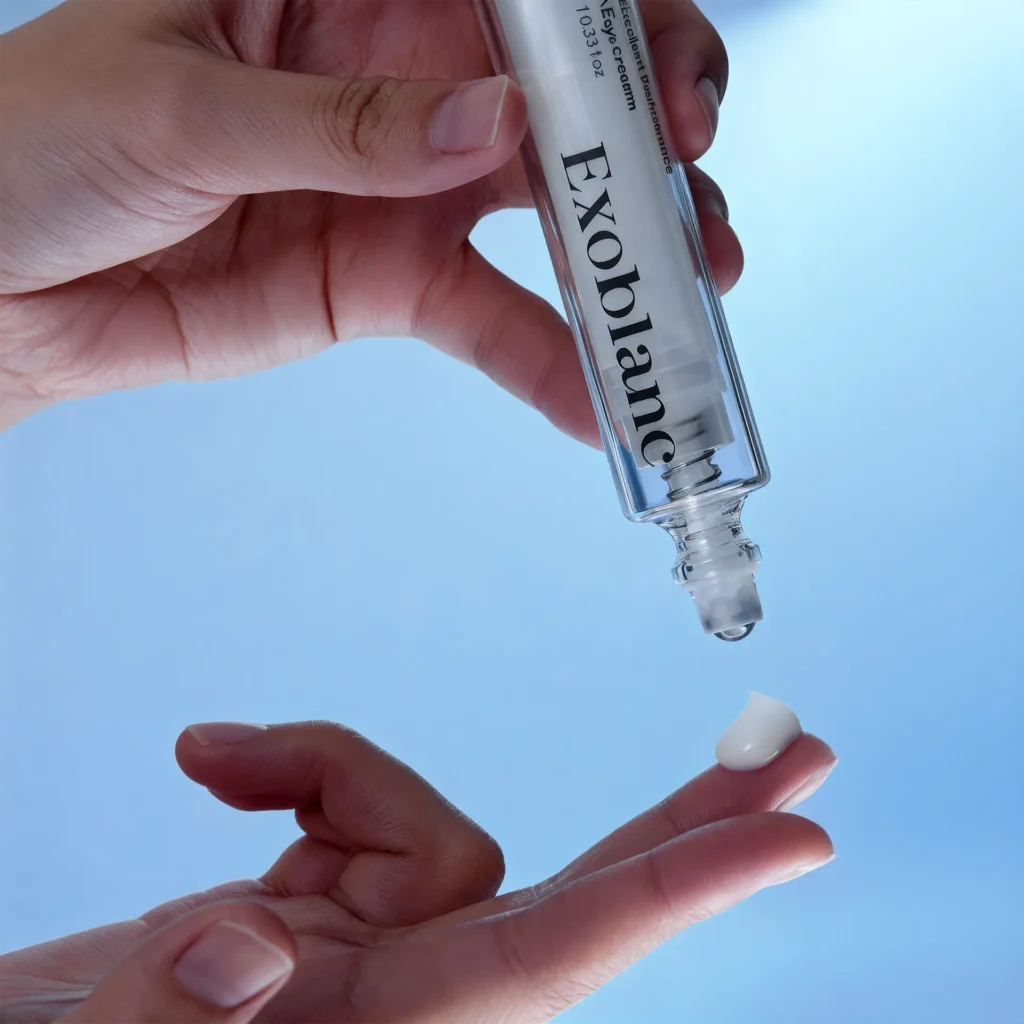
Exoblanc NMN Eye Cream
NMN, plant exosomes, peptides and niacinamide for a brighter, smoother-looking eye area.
Frequently asked questions
What are plant exosomes in skincare?
They are nano-sized lipid vesicles released by plant cells, usually grown in callus culture, that carry the plant cell’s lipids, proteins and RNA fragments. In skincare they are used as a conditioning ingredient in serums, creams and eye care.
Are plant exosomes the same as stem cells?
No. A plant exosome is a particle released by a cell, not a cell. It is not alive and cannot divide. Products that say ‘stem cell’ and products that say ‘exosome’ are describing different things.
What are rose exosomes?
Rose exosomes are extracellular vesicles isolated from Rosa damascena (Damascus rose) callus cultures. They appear on ingredient lists as Rosa Damascena Callus Extracellular Vesicles or callus culture extract.
Do plant exosomes work in skincare?
Laboratory studies on cultured skin cells report antioxidant and skin-conditioning activity. Clinical results in people are limited, so they are best viewed as a promising conditioning ingredient rather than a proven active.
Are plant exosomes vegan?
Yes. Vesicles from plant callus culture or from probiotic bacteria contain no animal-derived material.
How do I use an exosome serum?
Apply to clean skin after cleansing and toning, before heavier creams and sunscreen. They pair well with hydrating and barrier-supporting ingredients. Patch test first if your skin is reactive.
References
- Cho BS, Lee HJ, Son B, et al. Characterization of Rosa damascena callus-derived exosome-like vesicles and their multifunctional activities in skin-related cellular models. Int J Mol Sci 2026;27(11):4938.
- Di Raimo R, Mizzoni D, Aloi A, et al. Antioxidant effect of a plant-derived extracellular vesicles’ mix on human skin fibroblasts: induction of a reparative process. Antioxidants (Basel) 2024;13(11):1373.
- Lu C, Li D, Gao W, et al. Plant-derived extracellular vesicles in skin and bone tissue engineering: current status, challenges, and future perspectives. Front Bioeng Biotechnol 2026;14:1764724.
- Contreras C, Ariza-Donado A. Extracellular vesicles in regenerative and cosmetic medicine: safety, clinical effectiveness, therapeutic applications, and regulatory challenges. Int J Mol Sci 2026;27(12):5541.
- Manufacturer data, Exoblanc PDRN Boosting Serum: Rosa damascena callus extracellular vesicles at 500 ppm.