Reviewed by the TRU Biologix Medical Team
Both help with uneven-looking skin tone, but they work on different steps of the same process, so the best answer is often both. Vitamin C is an antioxidant that brightens and helps defend against environmental stress; it is powerful but unstable. Tranexamic acid (TXA) is gentler and stable, and works on a different part of the pigment pathway. Sensitive skin often starts with tranexamic acid; dull skin often starts with vitamin C.
Key takeaways
- Vitamin C brightens and is an antioxidant, but pure ascorbic acid is unstable and can sting.
- Tranexamic acid is gentle and stable, and works on a different step of the pigment pathway.
- They can be used together: vitamin C in the morning, tranexamic acid in the evening, or layered in one routine.
- Neither replaces daily sunscreen, which is the foundation of any routine for even-looking tone.
What do tranexamic acid and vitamin C do?
Skin tone looks uneven when pigment is produced and distributed unevenly, often after sun exposure or irritation. Vitamin C (ascorbic acid) is a well-studied antioxidant: a dermatology review describes how it neutralises free radicals, interferes with an enzyme involved in melanin production, and supports a brighter, more even look. Its weak point is stability. Pure ascorbic acid breaks down with light, air and water, and works best at a low pH that can sting.
Tranexamic acid is a synthetic amino acid derivative. A 2023 dermatology review describes its use in skincare for uneven-looking tone, working on a different signalling step than vitamin C. It is water-soluble, stable and generally well tolerated in topical formulas.
Tranexamic acid is also a prescription medicine taken by mouth for other purposes. This article covers topical cosmetic use only.
Tranexamic acid vs vitamin C: the scorecard
| Tranexamic acid | Vitamin C | |
|---|---|---|
| Brightening and glow | ||
| Evening the look of tone | ||
| Gentleness | ||
| Stability in formula | ||
| Antioxidant support | ||
| Best time of day | Morning or evening | Morning, under sunscreen |
| Suits | Sensitive, reactive-feeling skin | Dull, tired-looking skin |
Editorial comparison based on Kim 2023 and Al-Niaimi 2017. Actual results depend on the formula and concentration.
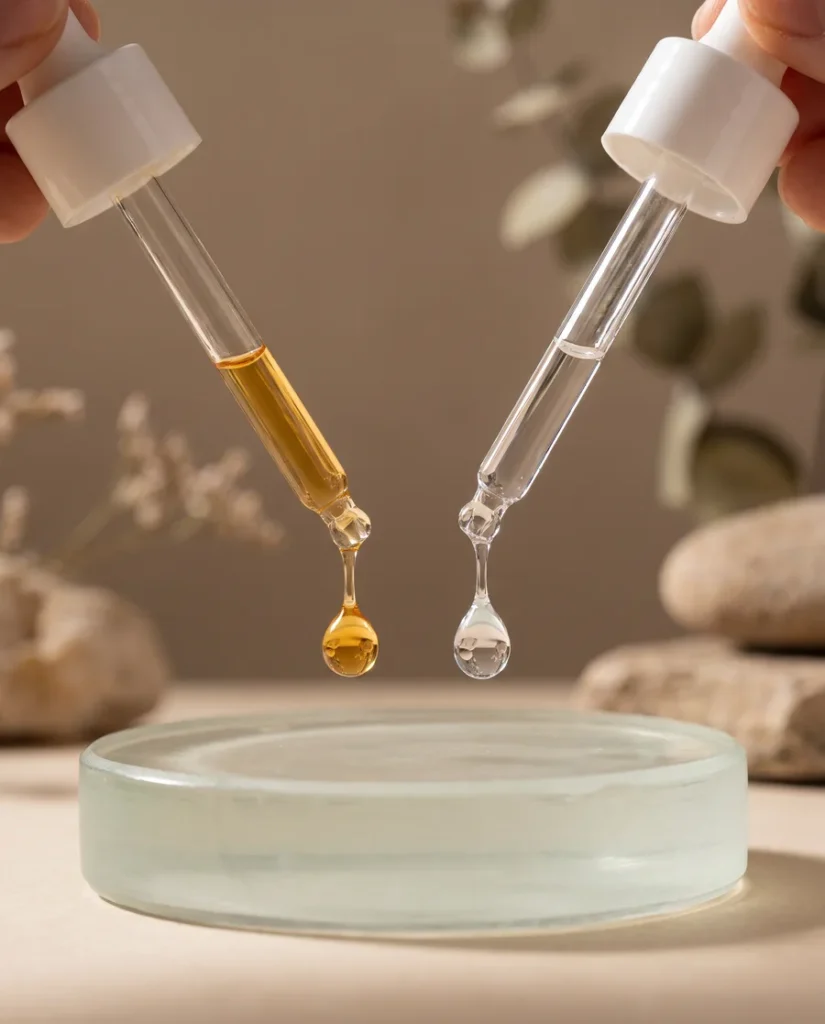
Can you use tranexamic acid and vitamin C together?
Yes. Because they work on different steps, they complement each other rather than compete. Two easy ways to combine them:
- Split routine: vitamin C in the morning under sunscreen, tranexamic acid in the evening.
- Same routine: apply the thinner product first, give it a minute, then the second.
If your vitamin C is a low-pH serum and skin feels sensitive, the split routine is gentler. Layering order is covered in ampoule vs serum vs essence.
Why vitamin C format matters
Because ascorbic acid is fragile, how it is packaged and delivered matters as much as the percentage on the label. Oils protect it from water; encapsulation protects it further. The Exoblanc VITA oil carries ascorbic acid at 10,000 ppm inside a reverse micelle, a water-in-oil structure that the skin’s oil-based outer layer accepts. In the brand’s testing, the encapsulated vitamin C absorbed ten times better than the same concentration on its own. More on how this works: vitamin C oil, ceramide oil and totarol.
Where tranexamic acid fits in clinic routines
Tranexamic acid often appears in professional brightening ampoules because it plays well with other actives. The Exoblanc COS BR ampoule pairs tranexamic acid with succinic acid for a brighter, more even-looking tone, and can sit alongside a vitamin C home routine.
Morning
Vitamin C
After cleansing, before moisturiser and sunscreen. Antioxidant support for the day.
Evening
Tranexamic acid
On clean skin, before moisturiser. Gentle enough for most nights.
Every day
Sunscreen
The step that protects everything else. Without it, neither ingredient can do much.
Who should start with which?
| If skin… | Start with | Why |
|---|---|---|
| Is sensitive or reacts to new products | Tranexamic acid | Gentle and stable |
| Looks dull and tired | Vitamin C | Strongest for glow and antioxidant support |
| Has uneven-looking tone and is resilient | Both, split AM/PM | Different steps, complementary |
| Is very dry | Vitamin C in an oil format | Oil helps skin and stabilises the vitamin C |
| Is around professional treatments | Ask the provider | In-office aftercare comes first |
Patch test new actives and introduce one at a time.
Products in this article
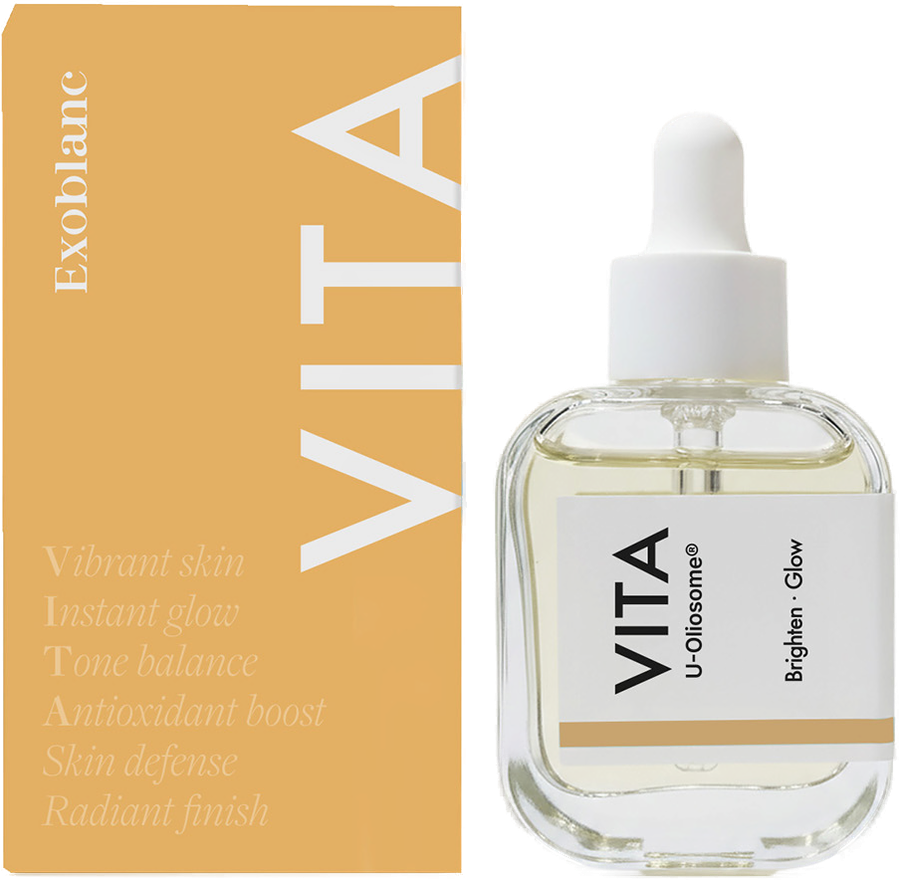
Exoblanc VITA Glow Boosting Oil
Ascorbic acid at 10,000 ppm in a reverse micelle oil for brighter, glowing-looking skin.

Exoblanc COS BR
Professional ampoule with tranexamic acid and succinic acid for a brighter, more even-looking tone.
Frequently asked questions
Is tranexamic acid better than vitamin C?
Neither is better overall. Tranexamic acid is gentler and more stable; vitamin C is stronger for glow and antioxidant support. Many routines use both.
Can I use tranexamic acid and vitamin C together?
Yes. They work on different steps, so they complement each other. Use vitamin C in the morning and tranexamic acid at night, or layer the thinner product first.
Is tranexamic acid safe for sensitive skin?
Topical tranexamic acid is generally well tolerated and is often a good first choice for sensitive skin. Patch test first, as with any new active.
When should I use vitamin C, morning or night?
Morning is most common, under sunscreen, because of its antioxidant role. It can be used at night if it irritates skin in the morning.
How long does it take to see a more even-looking tone?
Expect several weeks of consistent use alongside daily sunscreen. Skin tone changes gradually.
Do I still need sunscreen?
Yes. Daily broad-spectrum sunscreen is essential for even-looking skin; no serum replaces it.
References
- Kim KM, Lim HW. The uses of tranexamic acid in dermatology: a review. Int J Dermatol 2023;62(5):589–598. doi:10.1111/ijd.16160
- Al-Niaimi F, Chiang NYZ. Topical vitamin C and the skin: mechanisms of action and clinical applications. J Clin Aesthet Dermatol 2017;10(7):14–17.
- Manufacturer data, Exoblanc Oil VITA: ascorbic acid 10,000 ppm in a reverse micelle; brand absorption testing.
- Manufacturer data, Exoblanc COS BR: main ingredients (tranexamic acid, succinic acid).