Reviewed by the TRU Biologix Medical Team
Many topical actives underperform for a simple reason: they never get past the skin’s outer layer. That layer, the stratum corneum, is a lipid barrier built to keep water and water-soluble molecules out. Ingredients that dissolve in water, vitamin C being the textbook example, sit on top of it and penetrate poorly unless the formulation is engineered to help them through. That is why the delivery system often matters as much as the active itself.
Key takeaways
- The skin’s outer layer is a lipid barrier that blocks most water-soluble actives.
- Size matters too: molecules above roughly 500 daltons penetrate intact skin poorly.
- Delivery systems change what the barrier sees: liposomes and reverse micelles work in different ways.
- Topical carriers and in-office procedures are complementary, not interchangeable.
The barrier is built to keep things out
The stratum corneum is often described with a brick-and-mortar model. The bricks are corneocytes, flattened dead keratinocytes. The mortar is a continuous lipid matrix between them, made mainly of ceramides, cholesterol and free fatty acids arranged in tightly packed layers. Anything applied to the skin has to find its way through that lipid mortar.
Two properties largely decide whether a molecule makes it:
- Size. The widely cited 500-dalton rule holds that molecules above roughly 500 Da penetrate intact skin poorly. Most ingredients known to cross the barrier easily sit below that threshold.
- Solubility. Because the pathway is lipid, moderately oil-soluble molecules move through far more easily than highly water-soluble or charged ones.
An active can be small enough and still fail on solubility. That is exactly the problem with vitamin C.
Why vitamin C is the textbook problem
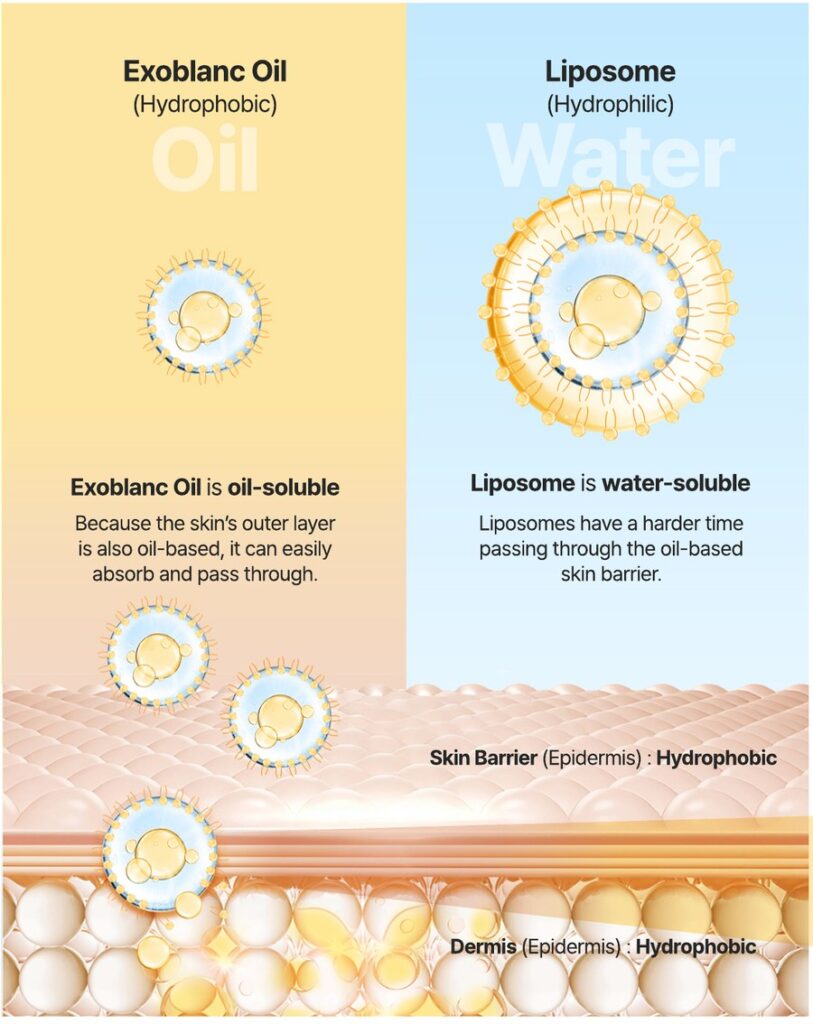
L-ascorbic acid is a small molecule, about 176 Da, comfortably under the size threshold. Its difficulty is that it is highly water-soluble and, at normal skin pH, mostly ionised. The lipid matrix of the stratum corneum resists it.
Classic absorption work by Pinnell and colleagues, carried out on pig skin, showed that plain L-ascorbic acid only entered the skin when formulated at a pH below 3.5, where more of it stays in its un-ionised form. That approach works, but acidic formulas can sting and irritate, and L-ascorbic acid oxidises quickly once exposed to air, light and water. Formulators are left balancing penetration, stability and tolerance against one another. Delivery systems are an attempt to stop making that trade-off.
What a delivery system actually changes
A delivery system does not change the active. It changes what the barrier sees. By wrapping the active in a carrier, the formulation can present a different size, surface and solubility to the stratum corneum, and protect the active from degrading before it gets there.
Liposomes are phospholipid vesicles with a water core, the most familiar carrier in professional skincare. Their outer surface is water-facing, they are relatively large (typically around 100 nm) and they generally encapsulate only a fraction of the active. They can also be destabilised by the emulsifiers used in creams and serums.
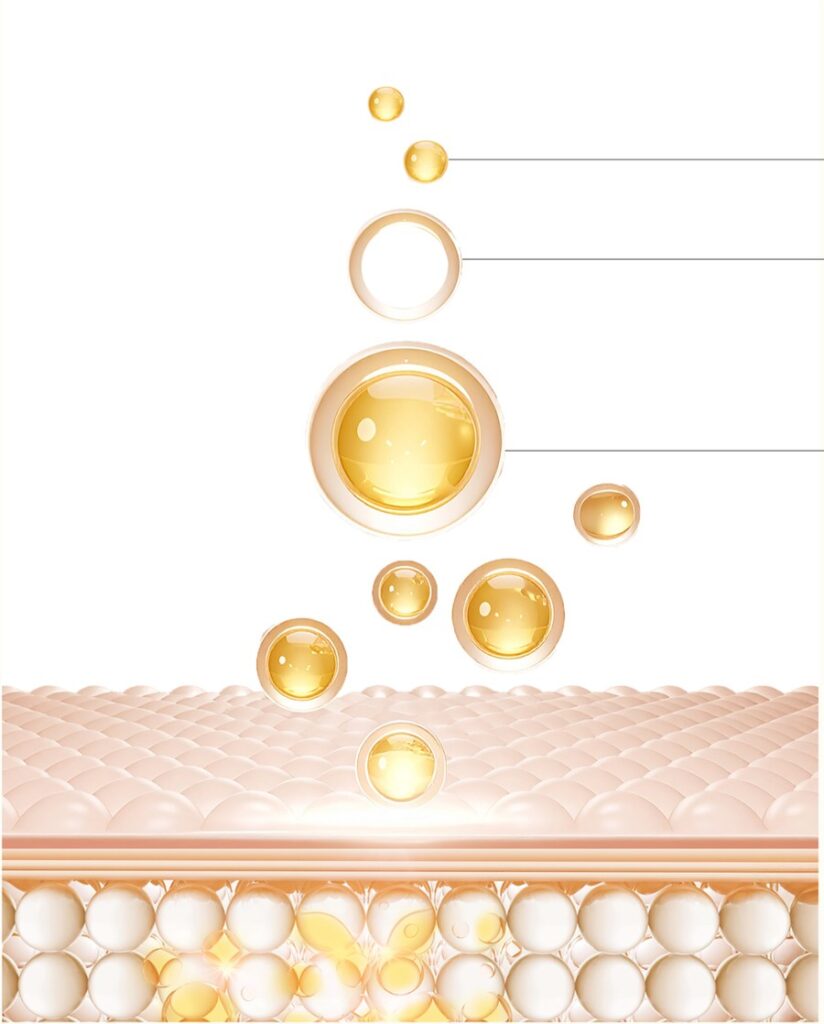
Reverse micelles flip that structure: a water core surrounded by an oil-facing shell. The water-soluble active travels inside, while the barrier only sees an oil-soluble particle. Reverse micelles can also be very small and form by self-assembly rather than high-pressure processing.
Professional treatments such as microneedling are a separate category: in-office procedures performed by licensed providers, not daily home care.
| Liposome | Reverse micelle | Professional microneedling | |
|---|---|---|---|
| Outer surface | Water-facing | Oil-facing | Not a carrier |
| Typical size | ~100 nm | ~10 nm* | Not applicable |
| Encapsulation | Partial (10–15%*) | Up to 100%* | Not applicable |
| Setting | Home or clinic | Home or clinic | In-office only |
*Manufacturer data for Exoblanc Oil’s BIOLIPID reverse micelle compared with a typical liposome.
Reverse micelles in practice: Exoblanc Oil
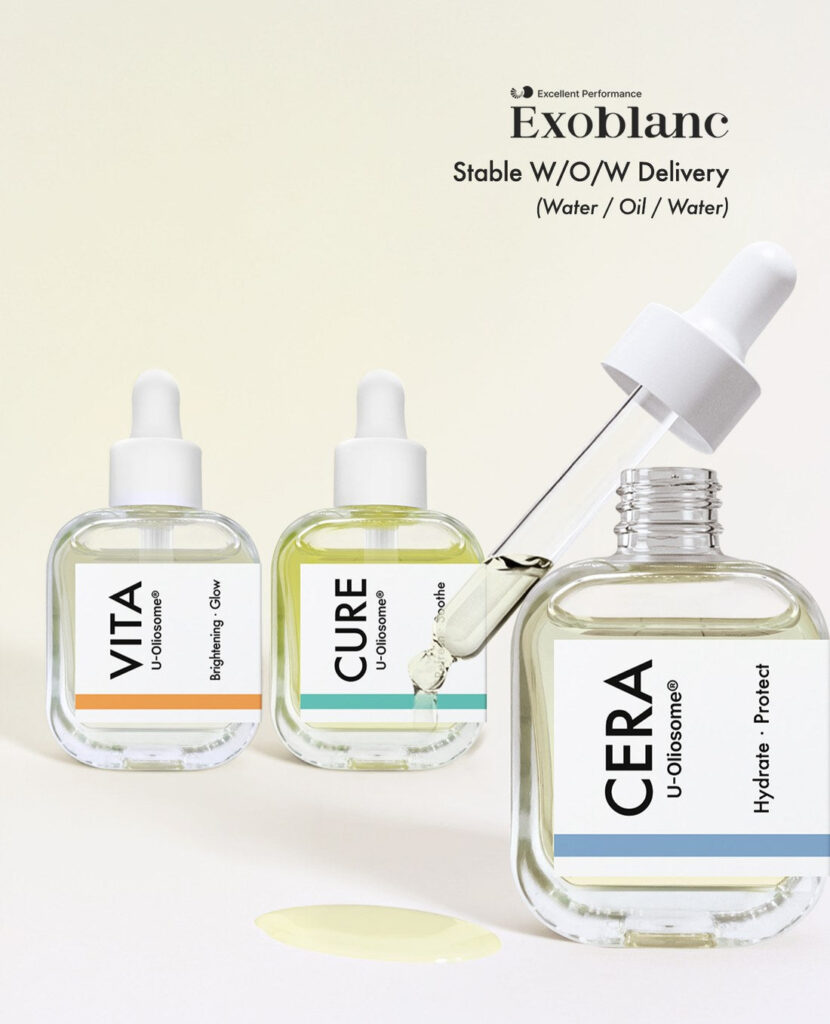
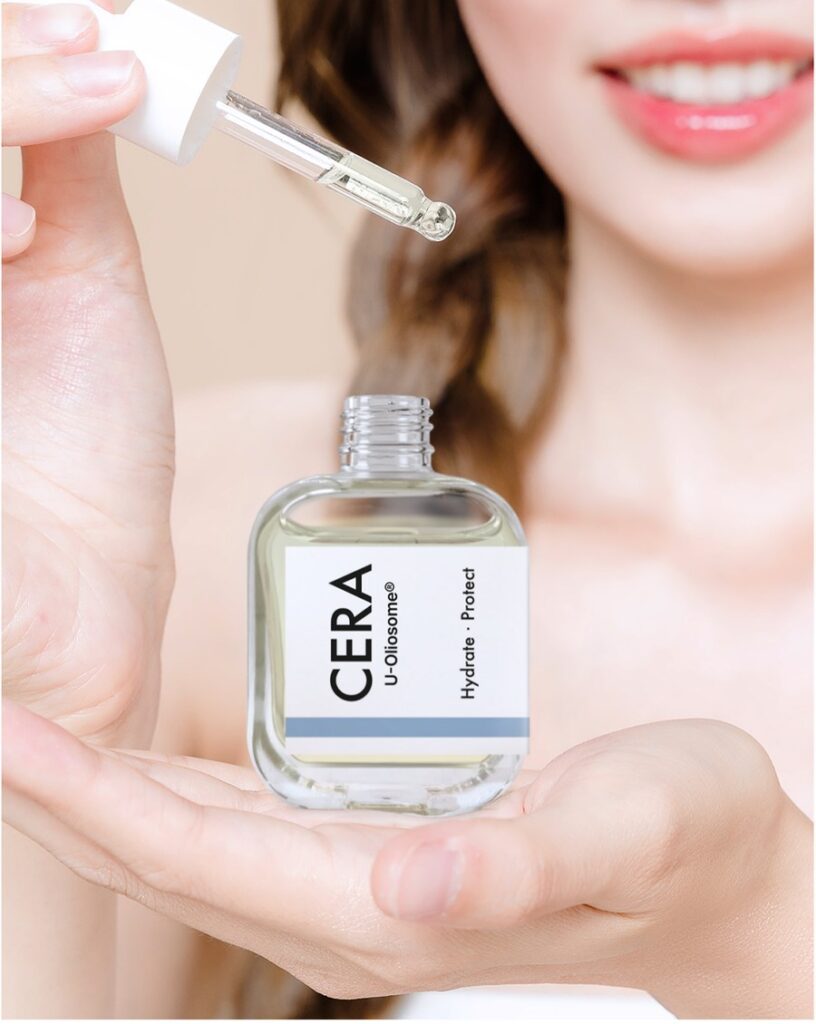
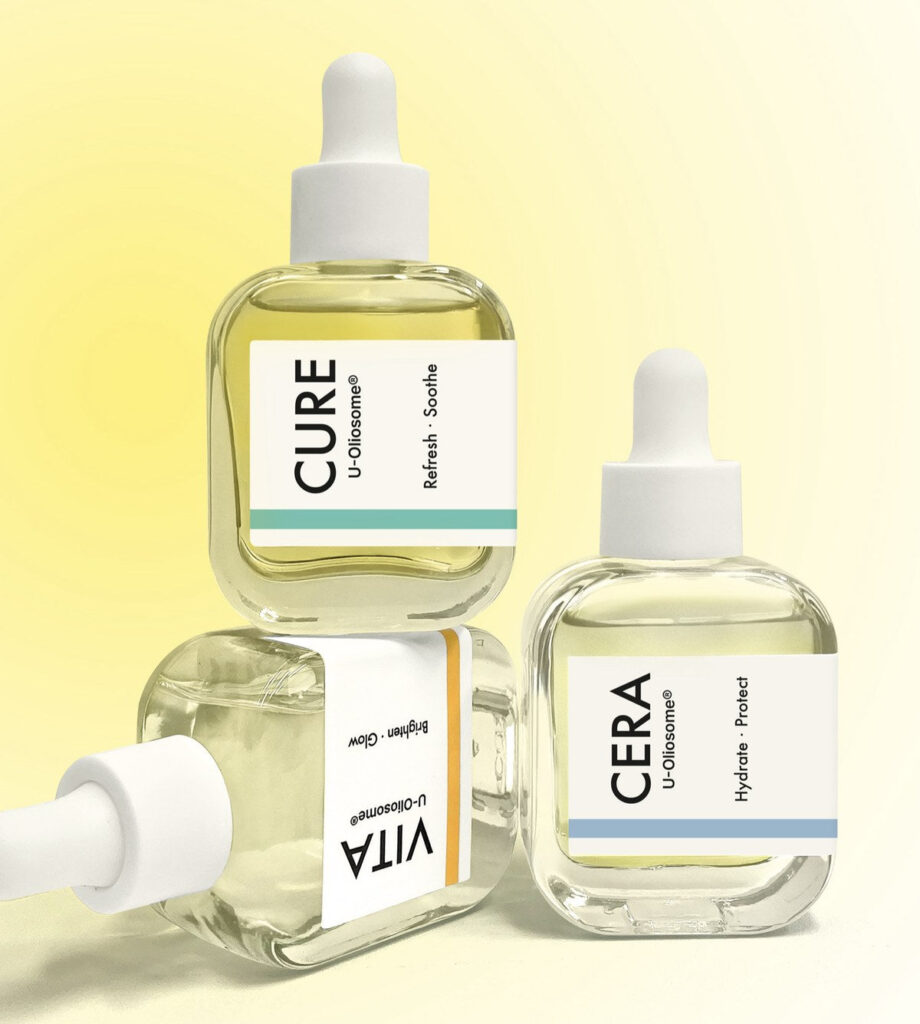
Exoblanc Oil is a 30 mL Korean facial oil built on this principle. Each active is wrapped in BIOLIPID, a functional lipid produced by fermenting and recombining oil, which self-assembles into reverse micelles. Three variants share the same delivery system: CERA (Ceramide NP, 10,000 ppm) for dry, tight skin, VITA (ascorbic acid, 10,000 ppm) for dullness and uneven-looking tone, and CURE (Totarol, 5,000 ppm) for congested-looking, oily skin.
In a manufacturer Franz cell study on Strat-M, a synthetic skin model, encapsulated vitamin C showed about ten times the cumulative absorption of plain ascorbic acid over five hours. This is an in-vitro result, not a clinical outcome. A separate patch test by Korea Dermatology Research Institute found no signs of irritation for VITA.
Home care and in-office treatment
Even a well-engineered topical carrier works with the barrier, not around it. In-office options, such as the FDA-cleared MicronJet 600 intradermal needle and the FDA-cleared Exceed Unlimited microneedling device, are used only by licensed providers and follow their own clinical protocols.
The two are complementary. In-office treatment happens a few times a year; a home-care product with a delivery system that suits the barrier keeps actives arriving between visits. For a needle-free option at home, see marine spicules.
What this means for home-care recommendations
- Ask how the active is delivered, not just how much is in the bottle. A high percentage of an active that cannot cross the barrier does less than a lower one that can.
- Match the carrier to the active. Water-soluble actives benefit most from an oil-compatible carrier; lipophilic actives often cross well on their own. Very large molecules such as PDRN and polynucleotides work mainly at the surface and in the upper layers of the skin.
- Weigh stability as well as penetration. An active that degrades in the bottle never gets the chance to penetrate at all.
- Keep the barrier intact. Pairing actives with barrier support keeps daily use comfortable.
From TRU’s provider education
Delivery is a recurring theme in TRU Biologix provider education. A June 2026 TRU webinar, Beyond the Booster: Why Delivery Determines Results, with Kristen Hanenian, APRN, was built around this question. In an earlier session, Shelbi Weatherly, FNP, described starting patients on Exoblanc Spicule Cream two weeks before laser resurfacing to prepare the skin.
Upcoming sessions are listed on the TRU Biologix webinars page.
Products in this article
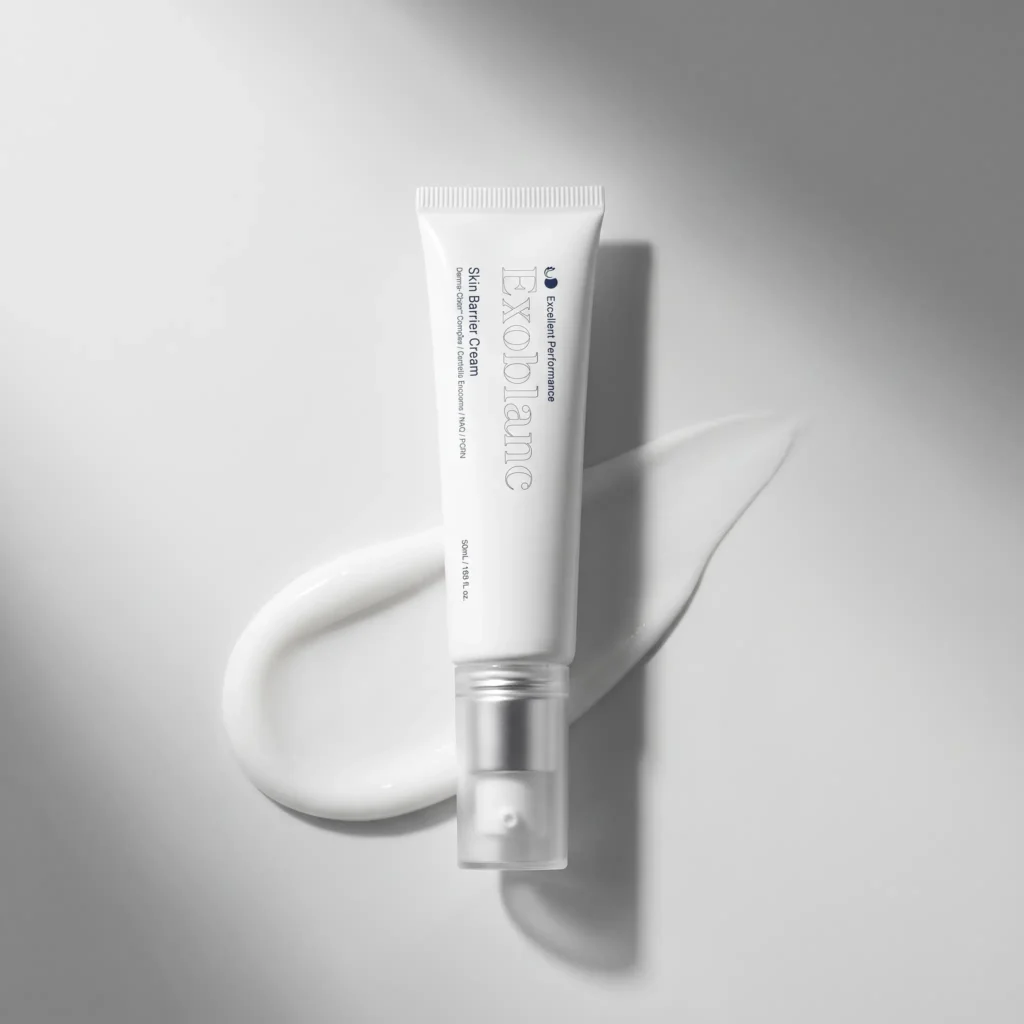
Exoblanc Skin Barrier Cream
Barrier support with Derma-Clear, PDRN, NAD and CICA-Exo.
Frequently asked questions
Why can't vitamin C penetrate the skin on its own?
L-ascorbic acid is small enough to cross the skin, but it is highly water-soluble and mostly ionised at skin pH, so the lipid matrix of the stratum corneum resists it. It penetrates well only at a low pH, which can irritate, or when carried in a delivery system.
What is the difference between a liposome and a reverse micelle?
A liposome has a water core and a water-facing outer surface. A reverse micelle has a water core inside an oil-facing shell, so the lipid barrier encounters an oil-soluble particle. Reverse micelles can also be much smaller and are formed by self-assembly.
What is the 500-dalton rule?
It is the observation that molecules larger than about 500 daltons penetrate intact skin poorly. Size is one factor; solubility is the other, which is why some small molecules still struggle.
Does a topical delivery system replace microneedling?
No. Topical carriers improve how well an active crosses the outer barrier in daily use. Professional microneedling is a separate in-office procedure performed by licensed providers. The two are complementary.
References
- Elias PM. Epidermal lipids, barrier function, and desquamation. J Invest Dermatol 1983;80 Suppl:44s–49s.
- Bos JD, Meinardi MM. The 500 Dalton rule for the skin penetration of chemical compounds and drugs. Exp Dermatol 2000;9:165–9.
- Pinnell SR, Yang H, Omar M, et al. Topical L-ascorbic acid: percutaneous absorption studies. Dermatol Surg 2001;27:137–42.
- Haq A, Goodyear B, Ameen D, Joshi V, Michniak-Kohn B. Strat-M synthetic membrane: permeability comparison to human cadaver skin. Int J Pharm 2018;547:432–7.
- Manufacturer data, Exoblanc Oil VITA: Franz cell diffusion on Strat-M membrane, 5 hours; patch test by Korea Dermatology Research Institute Co., Ltd.