Reviewed by the TRU Biologix Medical Team
PDRN (polydeoxyribonucleotide) is a purified mix of short DNA fragments, usually extracted from salmon or trout and listed on ingredient labels as sodium DNA. In skincare it appears in serums, creams and sheet masks aimed at hydrated, smoother and plumper-looking skin. It is also the breakout ingredient of the moment: a 2026 industry trends report ranked it first among skincare ingredients for growth in popularity.
This guide covers what PDRN actually is, what the research does and does not show, and how to choose between the formats. For the difference between PDRN and its longer-chain relative, see PDRN vs polynucleotides (PN).
Key takeaways
- PDRN is a purified mix of short DNA fragments, usually from salmon or trout, listed on labels as sodium DNA.
- In laboratory research its best-described mechanism is activation of the adenosine A2A receptor.
- PDRN is a large molecule, so topical products work at the surface and in the upper layers of the skin.
- Serums suit daily layering, creams seal in moisture, and sheet masks add a concentrated occasional step.
What is PDRN?
PDRN is short for polydeoxyribonucleotide: a chain of deoxyribonucleotides, the building blocks of DNA. Manufacturers extract DNA from fish, purify it to remove proteins and other material, and break it into shorter fragments with a controlled molecular weight.
On an ingredient list PDRN usually appears as sodium DNA, the salt form of the purified DNA. Skincare brands may call it salmon DNA, PDRN or simply DNA, and the three names generally refer to the same family of ingredients.
The defining feature is chain length. A 2025 review proposed a molecular-weight cutoff of 1,500 kDa: fragments below it count as PDRN, longer chains above it as polynucleotides (PN). That difference changes texture and behaviour, which is why the two are not interchangeable.
Why is PDRN called salmon DNA?
Because most of it comes from salmon. Commercial PDRN is typically extracted from the milt (sperm cells) of salmon or trout, which is unusually rich in DNA. That origin is where the “salmon sperm facial” nickname comes from; in a finished product it is a highly purified ingredient, not raw fish material.
Two newer alternatives are appearing on shelves: plant-derived PDRN (often sold as vegan or phyto-PDRN) and DNA fragments produced by fermentation, known as Lacto-PDRN. They are marketed under the same name but come from different sources and have a much shorter research record than fish-derived PDRN; we compare all three in vegan PDRN vs salmon PDRN. The PDRN in the Exoblanc line is salmon-derived, so like most PDRN products it is not vegan.
How does PDRN work in the skin?
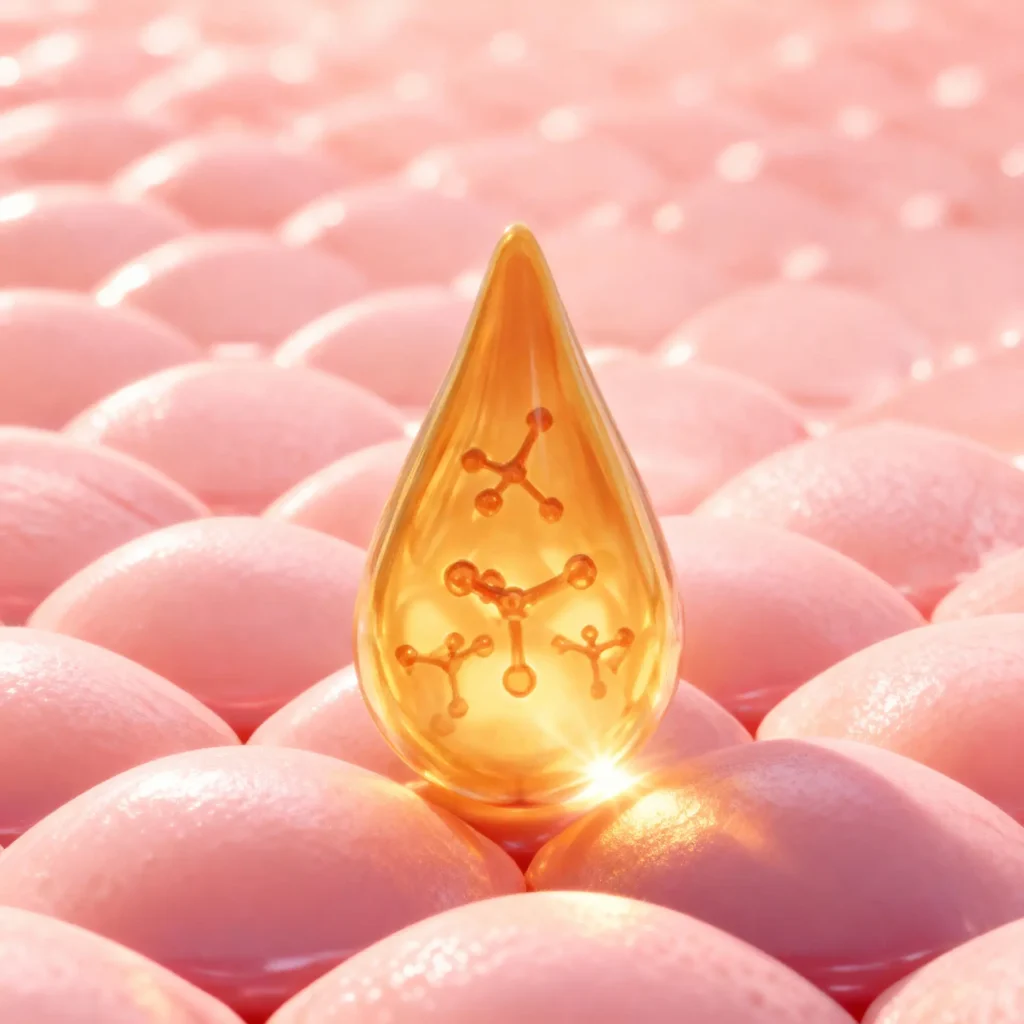
Most of what is known about PDRN comes from laboratory research, not from studies of topical skincare. In that research its best-described mechanism is activation of the adenosine A2A receptor. PDRN also supplies nucleotides and nucleosides that cells can reuse through what is called the salvage pathway.
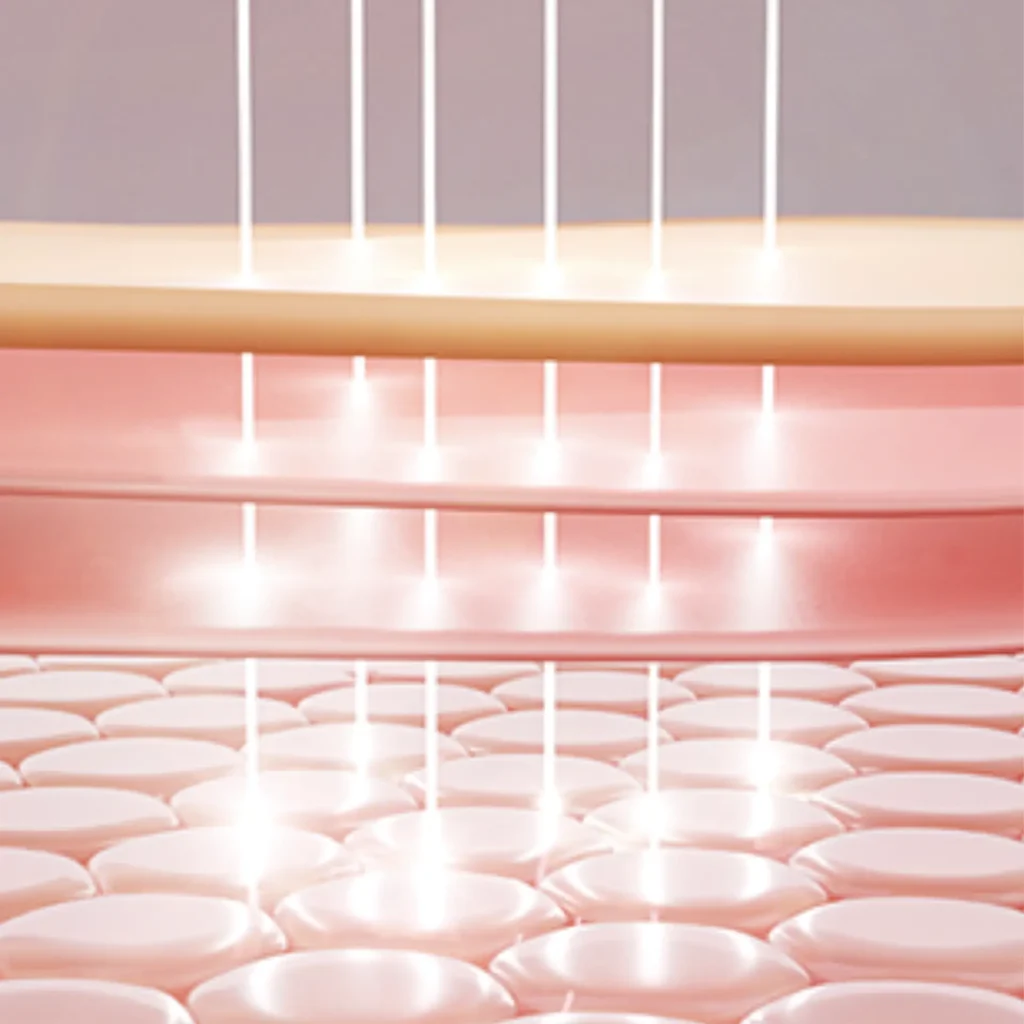
Topical products are a different situation. Molecules much larger than about 500 daltons cross intact skin poorly, and even short PDRN fragments are far above that size. So a PDRN serum or cream works at the surface and in the upper layers of the skin, where formulas pair it with humectants and soothing ingredients for skin that looks and feels hydrated, smoother and plumper.
That is also why the base formula matters as much as the headline ingredient. We explain the barrier problem in more detail in how delivery systems help actives get past the skin barrier.
What are the benefits of PDRN for skin?
In a topical serum, cream or mask, the benefits of PDRN are cosmetic: skin that looks and feels hydrated, smoother and plumper, and feels more comfortable. Much of what is said about PDRN online comes from laboratory research, so it helps to separate what a skincare product can realistically offer.
- Hydration. PDRN formulas are built around moisture, usually alongside humectants such as hyaluronic agents, for skin that feels supple rather than tight.
- Smoother-looking texture. Well-hydrated skin reflects light more evenly, which reads as smoother and more radiant.
- A plumper look. Hydration is also what gives skin a bouncier, plumper appearance in the short term.
- Comfort. PDRN serums and creams are often chosen for skin that feels dry, tight or easily stressed, including in the home routine around professional treatments.
- Easy layering. PDRN sits comfortably alongside other actives. If you use retinol, see PDRN vs retinol for how to layer the two.
What topical PDRN is not is a shortcut past the skin barrier. Expect results in how skin looks and feels, built up with consistent daily use.
PDRN serum, cream or mask: which should you use?
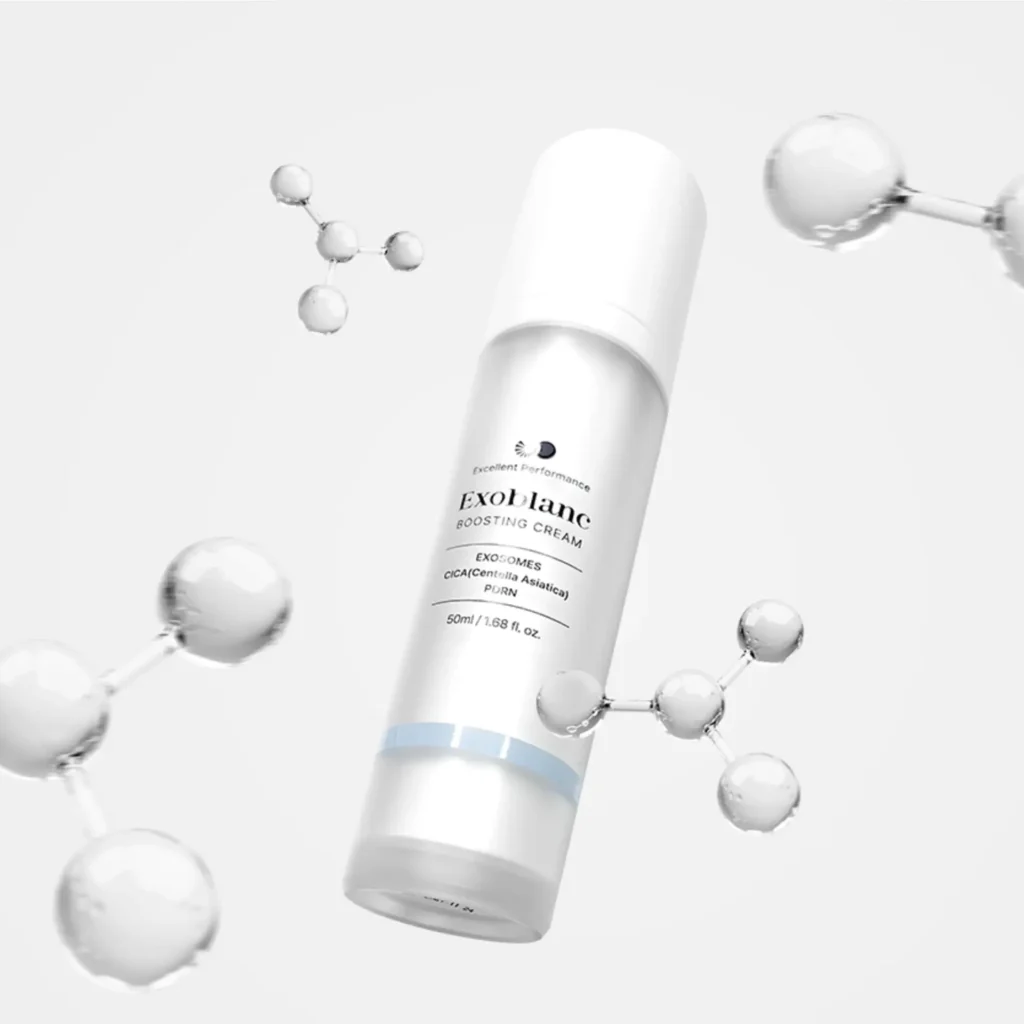
They do different jobs in a routine, so many routines use more than one. A serum is the easiest daily step, a cream locks in moisture, and a sheet mask is an occasional, more concentrated step.
| PDRN serum | PDRN cream | PDRN sheet mask | |
|---|---|---|---|
| Texture | Light, fast-absorbing | Richer, cushioning | Essence-soaked sheet |
| Best for | Dehydrated or combination skin, layering under other products | All skin types; dry or tight-feeling skin | A concentrated hydration step |
| Where in the routine | After toner, before cream | Last step before SPF in the morning | After cleansing, in place of serum |
| How often | Daily, as directed | Daily, as directed | Weekly, or as directed |
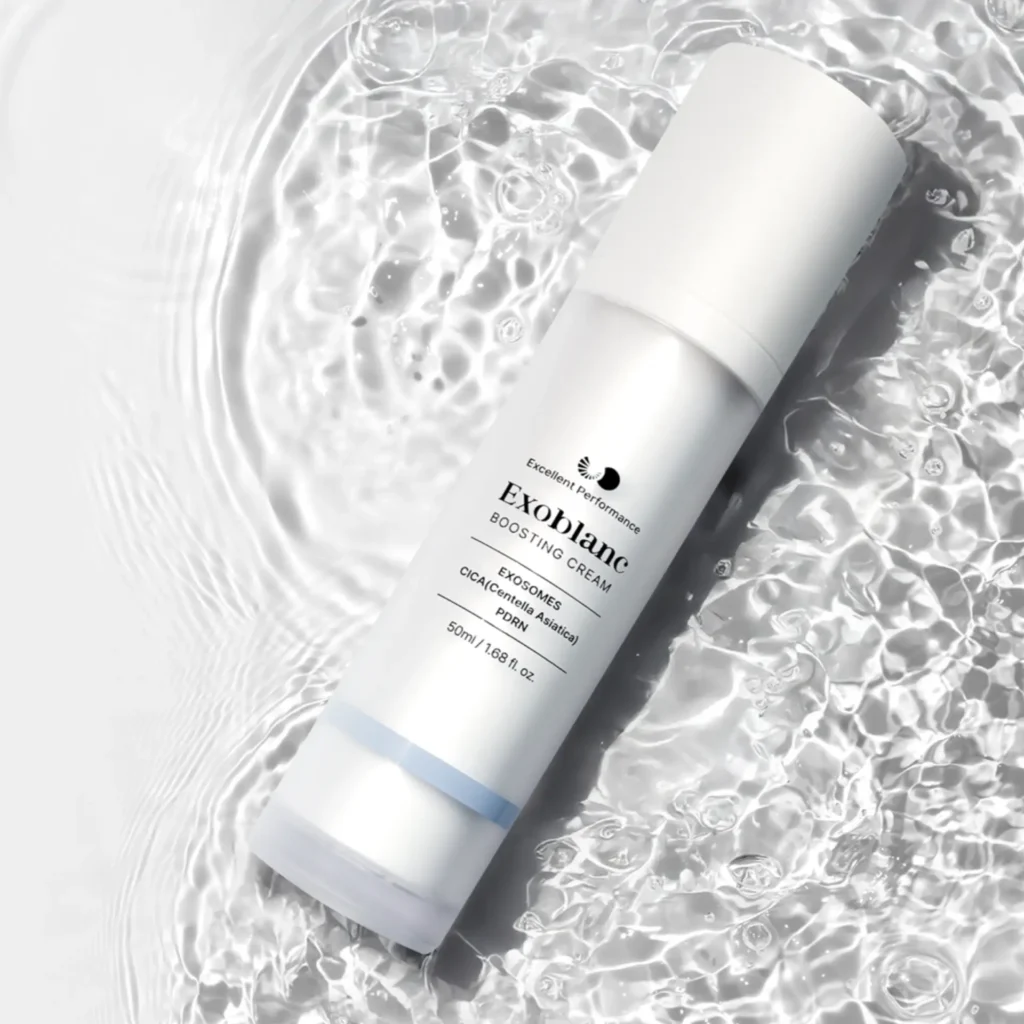
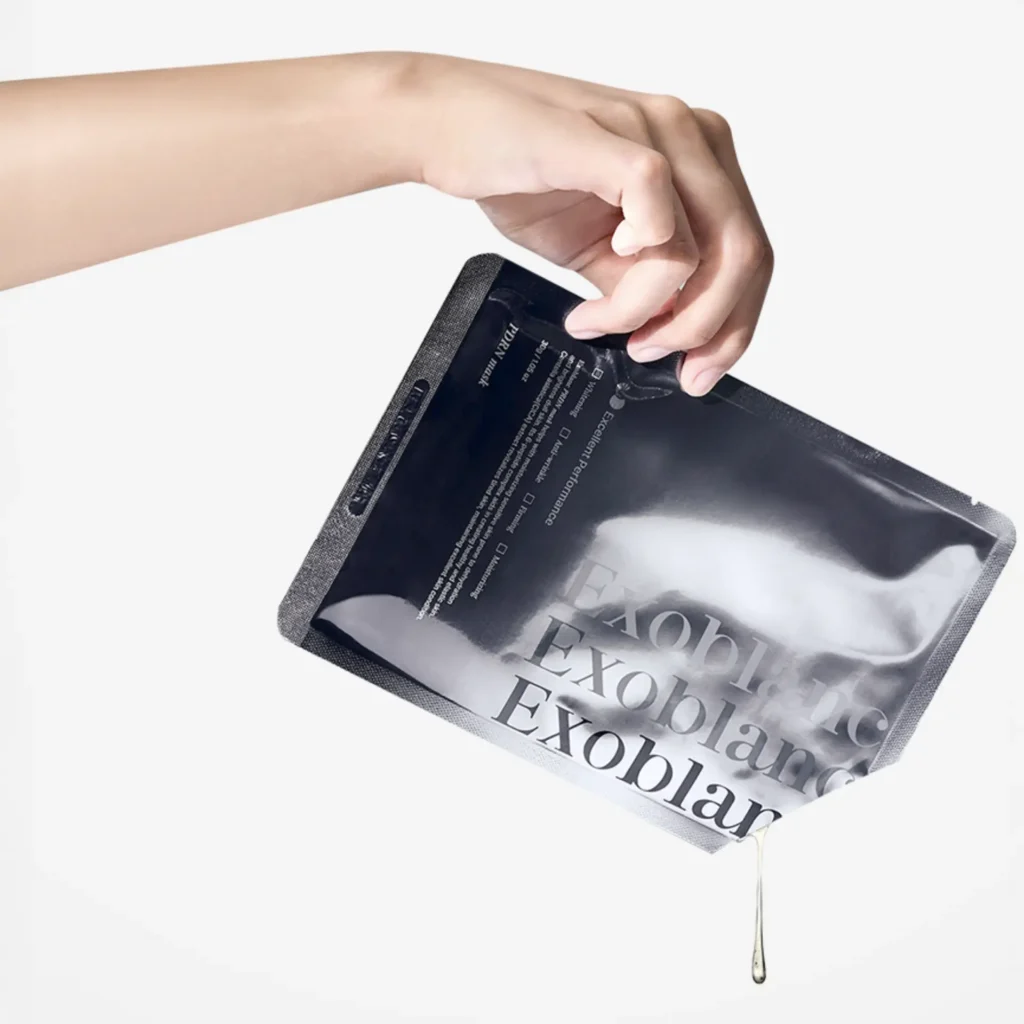
| Exoblanc option | PDRN Boosting Serum | PDRN Boosting Cream | PDRN Mask (30 mL essence per sheet) |
Exoblanc details from TRU Biologix product information.
How to use PDRN in a routine
- Morning: cleanse, tone, apply a PDRN serum, follow with moisturiser, and finish with broad-spectrum sunscreen.
- Evening: the same order without sunscreen. PDRN is usually layered with other actives rather than replacing them; introduce one new product at a time.
- Once a week: swap the serum step for a PDRN sheet mask, then press in the leftover essence and seal with cream.
- Around professional treatments: PDRN serums and creams are often chosen for comfort and hydration in the home routine. Follow the treating provider’s aftercare instructions.
Patch-test any new product, and note that most PDRN is fish-derived if you avoid animal ingredients.
From TRU’s provider education
In a TRU Biologix provider webinar, Shelbi Weatherly, FNP, described building Exoblanc PDRN serum and boosting cream into her patients’ home care around laser resurfacing.
Upcoming sessions are listed on the TRU Biologix webinars page.
What to look for in a PDRN product
- Sodium DNA on the label. It confirms the ingredient is actually present rather than implied by the name.
- The source. Salmon, trout, plant or fermentation-derived PDRN are different materials, even when the front label says the same thing.
- The rest of the formula. Humectants, soothing ingredients and a well-built base decide how the product feels and how well it fits a routine.
- Professional versus retail. Professional lines are designed to slot into protocols that licensed providers build for their patients.
Exoblanc’s PDRN line pairs salmon-derived PDRN with Rosa Damascena callus extracellular vesicles (500 ppm), EGF and hyaluronic agents, in a lightweight serum, a daily cream and a bio-cellulose mask. Browse the PDRN Boosting Serum, the PDRN Boosting Cream and the PDRN Mask.
Products in this article

Exoblanc PDRN Boosting Serum
Lightweight PDRN serum with rose callus vesicles, EGF and hyaluronic agents for dehydrated or combination skin.
Exoblanc PDRN Mask
Bio-cellulose sheet mask with 30 mL of PDRN, EGF and peptide essence per use.
Frequently asked questions
What is PDRN in skincare?
PDRN (polydeoxyribonucleotide) is a purified mix of short DNA fragments, usually extracted from salmon or trout. It appears on ingredient lists as sodium DNA and is used in serums, creams and masks for hydrated, smoother and plumper-looking skin.
What are the benefits of PDRN for skin?
In topical skincare, PDRN is used for skin that looks and feels hydrated, smoother and plumper, and for comfort when skin feels dry or tight. It layers easily with other actives in a daily routine.
Is PDRN really made from salmon sperm?
Most commercial PDRN is extracted from the milt (sperm cells) of salmon or trout, which is rich in DNA. It is highly purified before it goes into skincare. Plant and fermentation-derived versions also exist, with a shorter research record.
Can topical PDRN penetrate the skin?
Only to a limited extent. PDRN fragments are far larger than the roughly 500-dalton size that crosses intact skin easily, so topical PDRN works at the surface and in the upper layers of the skin.
Is PDRN the same as polynucleotides?
No. Both are purified DNA fragments, but polynucleotides (PN) are longer chains with a higher molecular weight. A 2025 review proposed 1,500 kDa as the cutoff between the two.
Is PDRN vegan?
Usually not, because most PDRN is extracted from fish. Plant-derived and fermentation-derived PDRN exist, so check the ingredient source if you avoid animal-derived ingredients.
References
- Squadrito F, Bitto A, Irrera N, et al. Pharmacological activity and clinical use of PDRN. Front Pharmacol 2017;8:224. doi:10.3389/fphar.2017.00224
- Marques C, Porcello A, Cerrano M, et al. From polydeoxyribonucleotides (PDRNs) to polynucleotides (PNs): bridging the gap between scientific definitions, molecular insights, and clinical applications of multifunctional biomolecules. Biomolecules 2025;15(1):148. doi:10.3390/biom15010148
- Kim ST. Comparison of polynucleotide and polydeoxyribonucleotide in dermatology: molecular mechanisms and clinical perspectives. Pharmaceutics 2025;17(8):1024. doi:10.3390/pharmaceutics17081024
- Bos JD, Meinardi MM. The 500 Dalton rule for the skin penetration of chemical compounds and drugs. Exp Dermatol 2000;9(3):165–169. doi:10.1034/j.1600-0625.2000.009003165.x
- Spate and New York Society of Cosmetic Chemists. Ingredients Trends Report, April 2026 (reported by Happi, May 2026).
- Manufacturer data, Exoblanc PDRN Boosting Serum, PDRN Boosting Cream and PDRN Mask: ingredients, formats and mask essence volume.