Reviewed by the TRU Biologix Medical Team
A good winter skincare routine for dry skin does three things: cleanses gently, adds water, and seals it in. Low humidity and cold temperatures weaken the skin’s barrier function, so skin loses water faster and feels tight. The fix is rarely more products. It is swapping a few summer steps for richer, barrier-supporting ones and cutting back on anything stripping.
Key takeaways
- Cold, dry air and indoor heating reduce skin barrier function, so skin loses water faster in winter.
- Swap foaming-strong cleansers and frequent exfoliation for gentle cleansing and a richer, ceramide-based moisturiser.
- Layer water first (hydrating serum or essence), then lipids (cream or facial oil) to hold it in.
- Sunscreen stays in the morning routine all year, including on cloudy winter days.
Why does skin get so dry in winter?
Because the air holds less water. A review of climate and skin found that low humidity and low temperatures lead to a general decrease in skin barrier function, make skin more vulnerable to mechanical stress, and make it more reactive to irritants. Indoor heating lowers humidity further.
The skin’s outer layer stays supple thanks to two things: natural moisturising factors that hold water inside the cells, and lipids such as ceramides that fill the gaps between them. When the air is dry, water evaporates faster than skin can replace it, so the surface feels tight, looks dull and can flake. Ceramides make up roughly half of the lipids in that outer layer, which is why ceramide-based moisturisers are the backbone of most winter routines.
What should you change in your skincare routine for winter?
Keep the structure, change the textures. Here is what to swap when the weather turns.
| Step | Summer | Winter |
|---|---|---|
| Cleanser | Gel or foaming cleanser, twice a day | Gentle, non-stripping cleanser; water-only rinse in the morning if skin is very dry |
| Water | Hot showers are fine | Lukewarm water; hot water strips lipids |
| Exfoliation | 2–4 times a week | Cut to 1–2 times a week with a gentle PHA |
| Hydration | Light essence or gel serum | Add a hydrating layer (hyaluronic acid, glycerin) on damp skin |
| Moisturiser | Gel cream or lotion | Richer cream with ceramides |
| Facial oil | Optional | Useful at night to seal in water |
| Sunscreen | Every morning | Every morning (UV reaches skin through clouds and reflects off snow) |
| Environment | — | A humidifier in the bedroom helps |
Adjust to how skin feels; oily skin may only need the cleanser and moisturiser swaps.
How do you protect your skin barrier in winter?
Layer water first, then lipids. Humectants such as hyaluronic acid and glycerin draw water into the outer layer; a ceramide cream then fills the gaps and slows that water evaporating. Applied to slightly damp skin, the combination makes the biggest difference to how skin feels.
Equally important is what you take away. Strong foaming cleansers, frequent acids and long hot showers all remove lipids. Our comparison of ceramides vs niacinamide vs hyaluronic acid explains which ingredient does which job.

A simple winter skincare routine for dry skin
Five steps in the morning, five at night. Everything else is optional.
Morning
Lukewarm water, or a mild cleanser if skin feels oily.
Essence or hyaluronic acid serum on damp skin.
Vitamin C or niacinamide, if you use one.
A cream that supports the moisture barrier.
Broad-spectrum, every day.
Evening
Remove sunscreen without stripping.
Same as morning, on damp skin.
PHA once or twice a week only; skip on irritated nights.
Ceramide-based, applied generously.
A few drops pressed over cream to seal in water.
Facial oil or cream in winter?
Both, in that order, if skin is very dry. Creams contain water and lipids; oils are almost all lipid, so they add a final seal. Oils can also carry oil-friendly actives. The Exoblanc CERA Moisturising Oil, for example, carries ceramide NP at 10,000 ppm in a reverse micelle system, covered in our guide to vitamin C oil, ceramide oil and totarol. Why water-loving actives struggle to cross the barrier is explained in how delivery systems help.
For the cream step, the Exoblanc Skin Barrier Cream pairs NAD, PDRN, Derma-Clear and CICA-Exo in a soft cream that feels hydrating without being heavy, a useful middle ground for combination skin that turns dry in winter.
Winter skincare mistakes to avoid
Avoid
Over-exfoliating flakes
Flaking is dryness, not a build-up to scrub off. Hydrate first; exfoliate gently and rarely.
Avoid
Skipping sunscreen
UV is lower in winter but not absent, and snow reflects it. Keep SPF in the morning routine.
Avoid
Too many new products
Winter skin is more reactive. Introduce one new product at a time so you can tell what helps.
If you were chasing a dewy finish over summer, our piece on whether glass skin is bad for your skin covers how over-layering can backfire.
Products in this article
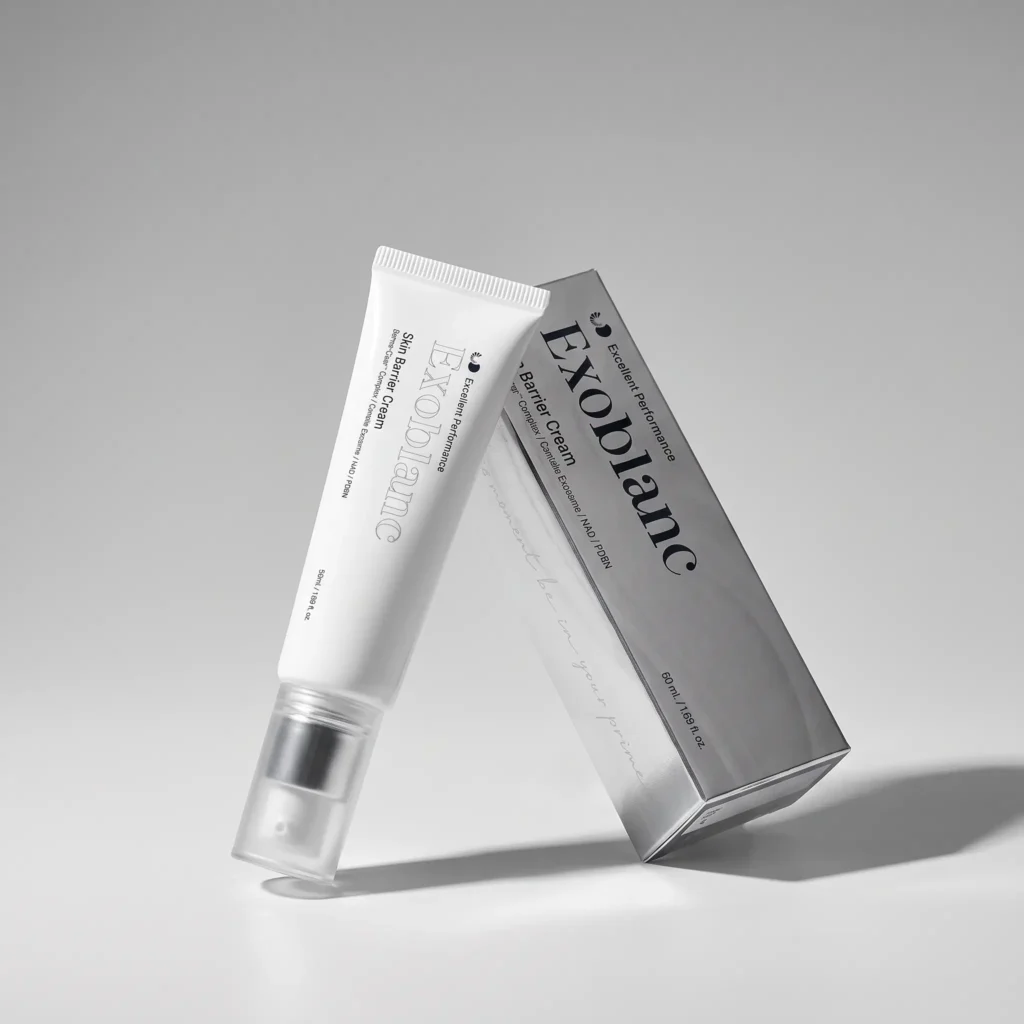
Exoblanc Skin Barrier Cream
Soft, hydrating cream with NAD, PDRN, Derma-Clear and CICA-Exo that supports the skin’s moisture barrier.
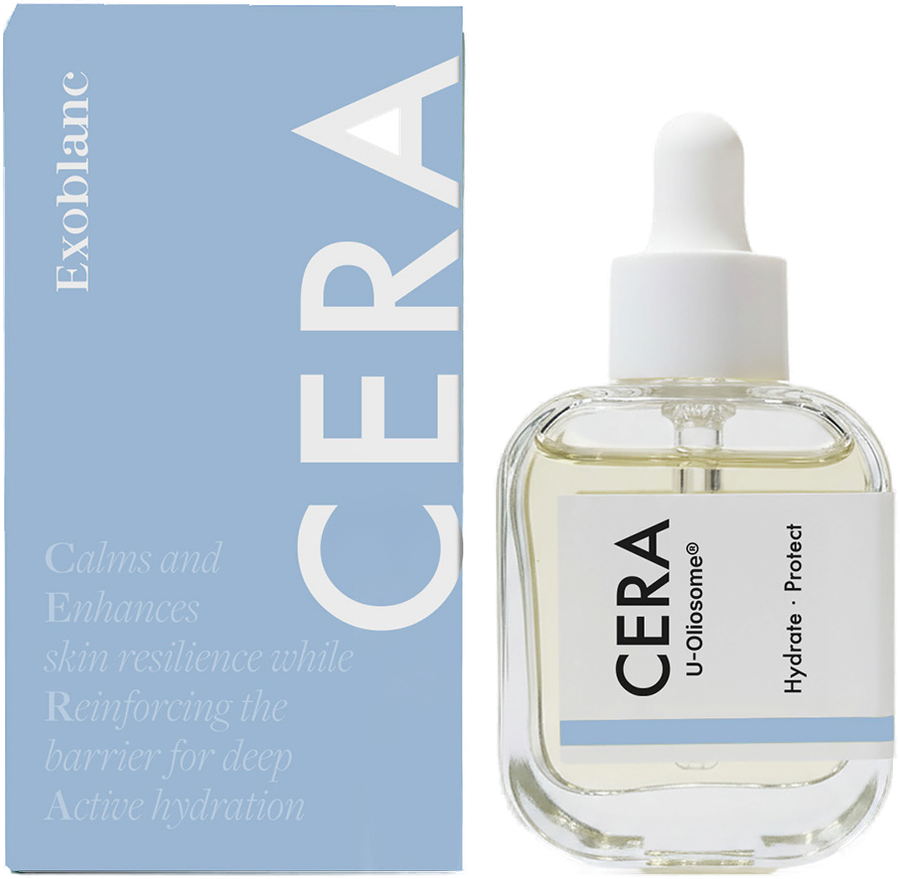
Exoblanc CERA Moisturising Oil
Ceramide NP at 10,000 ppm in a reverse micelle oil for dry, tight-feeling skin.
Frequently asked questions
What is the best winter skincare routine for dry skin?
Gentle cleanser, a hydrating layer on damp skin, a ceramide-based moisturiser and daily sunscreen in the morning. At night, swap sunscreen for a richer cream and, if needed, a few drops of facial oil.
Why does my skin feel tight in winter?
Low humidity and cold air reduce the skin’s barrier function, so water evaporates from the surface faster than usual and skin feels tight and dry.
Should I change my moisturiser in winter?
Most people benefit from a richer cream with ceramides in winter, especially at night. Oily skin may only need a slightly richer version of its usual moisturiser.
Should I exfoliate in winter?
Yes, but less. Cut back to once or twice a week with a gentle PHA exfoliant, and skip it on nights skin feels irritated.
Do I need sunscreen in winter?
Yes. UV levels are lower but still present, they pass through cloud and snow reflects them. Keep broad-spectrum sunscreen in your morning routine.
Is facial oil good for dry skin in winter?
Facial oil is a useful final step for dry skin because it is almost all lipid and helps seal in water. Apply it over moisturiser, especially at night.
References
- Engebretsen KA, Johansen JD, Kezic S, Linneberg A, Thyssen JP. The effect of environmental humidity and temperature on skin barrier function and dermatitis. J Eur Acad Dermatol Venereol 2016;30(2):223–249. doi:10.1111/jdv.13301
- Rawlings AV, Harding CR. Moisturization and skin barrier function. Dermatol Ther 2004;17(Suppl 1):43–48. doi:10.1111/j.1396-0296.2004.04s1005.x
- Meckfessel MH, Brandt S. The structure, function, and importance of ceramides in skin and their use as therapeutic agents in skin-care products. J Am Acad Dermatol 2014;71(1):177–184. doi:10.1016/j.jaad.2014.01.891
- Manufacturer data, Exoblanc Skin Barrier Cream and Exoblanc Oil CERA: ingredients.